In the early years of the new century I became for a while a Sunday school teacher.
How we ended up there is explained by Barbie, and a barbecue. I could see our little girl being immersed in a consumerist world and I didn’t like it. I said as much over beers one sunny summer afternoon to a neighbour at a barbecue. He was concurring and he was describing one thing they were doing about it: Sunday school at our local Anglican church. This would be the one my grandfather would duck as a schoolboy by offering to get the Sunday roast on. That would be the beautiful old Holy Trinity Church where Karren and I got married and Karren had politely kept askance thoughts to herself as the vicar walked us through his thinking about what makes a happy marriage.
This would be the church that Mum, when our parents came to live here, would go to each Sunday morning. People said at Mum’s funeral we didn’t know the church was such a big part of her life. I said it had been unexpected to us too that after we had all left home she had become the churchgoer she had once been before. She loved it all: the hymns, the readings, the fellowship of the congregation.
This would be the church that the neighbour was describing to me as having a Sunday school roll of 80 or more, friendly, not at all doctrinaire, kids loving it.
I said we’d like our little girl to be offered a perspective on the world that looked beyond consumption and self-absorption. He said we should bring her along and see, that the kids just really had a good time.
We went along. She liked it: crafts and games and songs; storytelling about consideration and charity and forgiveness.
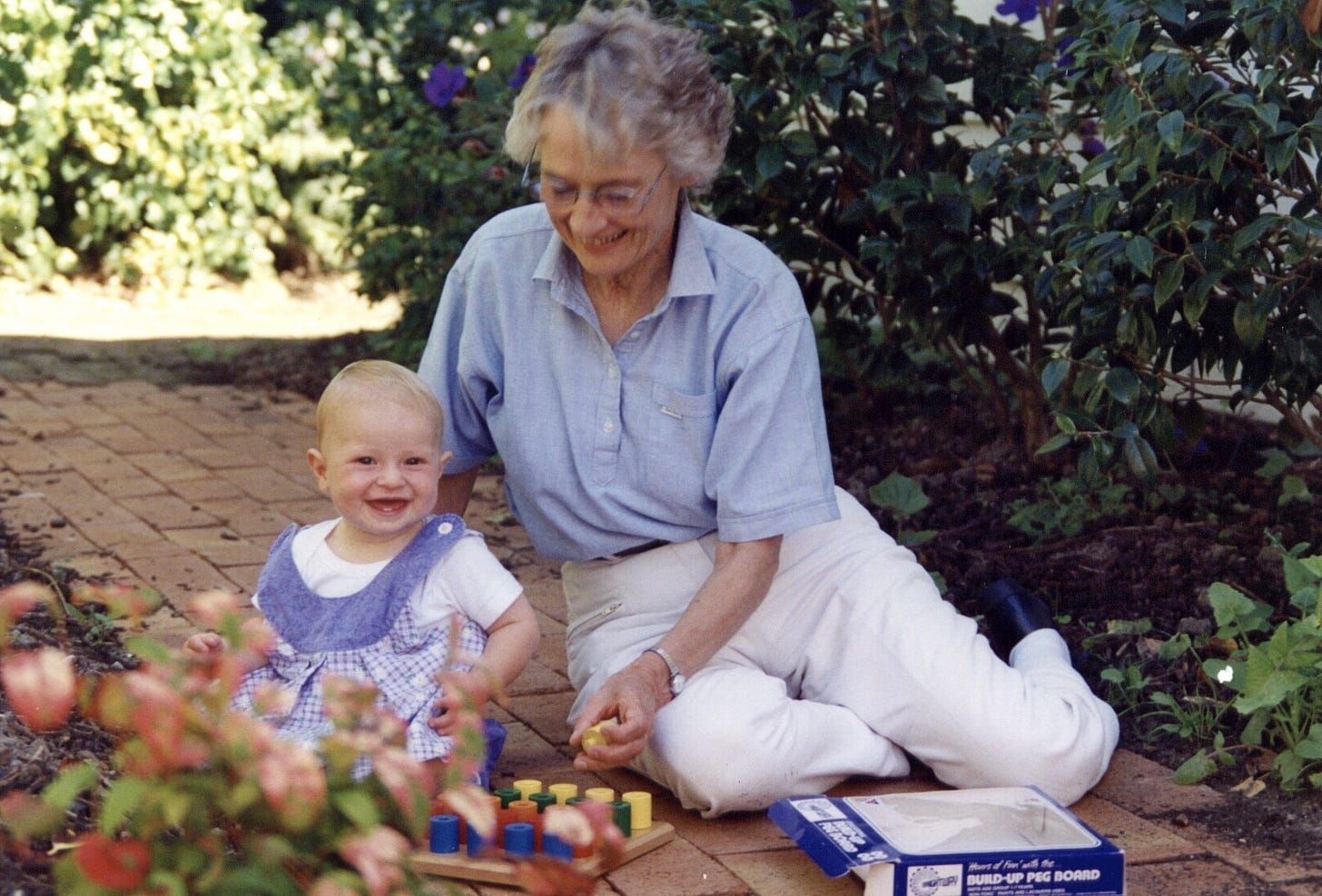
It was all pretty nice and afterwards Gran would be there to meet us at the end of the service and we’d have morning tea with the congregation, and then take her back to their place and she’d make us scrambled eggs for lunch with a happy smile. Nice to be doing something that made Gran happy. Nice to be doing something that gave Mary-Margaret a kind perspective on the world.
A few weeks in, the guy who ran the Sunday school asked would I be interested in helping?
I thought: guess I ought to, really. I began improvising a mixture of craft and games and songs and storytelling about consideration, charity and forgiveness.
I liked the people there, the company and kindness. Possibly I was hungry for it after a decade of isolated online life, writing speeches for people in the other hemisphere. Karren was supportive but also a little wary, she always has a prudent caution about anything that looks like zealotry.
We lasted about three years. I could happily teach the bible stories as allegories - think first of others, be kind, be helpful - but I was reluctant to treat them as anything more literal. As time went on, I could see I might not be sufficiently on the same page as the role required. By good chance old mate Finlay was starting a new weekly radio show and asked if I’d like to be a regular on it. I had my out, I took it.
Mum and Dad moved again and she was on to a different congregation, and just like that a chapter was over.
But of course we still saw the people of the congregation in the village, at school, out walking, at the beach. You still chat and are reminded that if you ever felt like going back there’d be a warm welcome.
The vicar retired and was succeeded by a very nice woman who was heart and soul of the community for a long time, and then in turn she moved on, and that brings us to the present day and front page stories in the local paper about an unholy schism.
Ructions at Holy Trinity? Surely not? But yes. Into the parish has come a new vicar, from England, sounding nice enough but possibly holding beneath a bushel a rather more austere theological outlook.
What place does he see for you in the church if you’re gay or a woman? At first blush, the words have the sound of inclusion and support. But disaffected parishioners say that when pressed, a more conservative point of view becomes apparent.
This, it has come to seem to them, is a vicar rather too keen on the conservative doctrines expressed in complementarianism. That is to say: the theological view that your men, and your women, they both have much to offer, but what they have to offer is different. So far so acceptable, some might say. But this has been finding its expression in such noxious ideas as the man has the job as head of the household in deciding for the family how to vote, and that right there is where I would be getting my out of my seat and pulling the emergency brake on the runaway train.
That’s not to say that’s what’s happening at Holy Trinity. But what has been emerging is that if you’re gay or a woman, this particular vicar sees a more proscribed role for you — in the telling, at least, of disaffected parishioners who have left, at least 70 of them.
What was so good about that church, that congregation — what made it so strong, it felt to me — was how welcoming and supportive everyone was, tolerant, positive. You undermine or lose that, you lose what matters most.
Faith and church can be a force for much good. It can be undermined so very much by the wrong people. Charlatans in the White House right now come especially to mind: crucifix-wearing handmaidens like Karoline Leavitt, swaggering fools like JD Vance presuming to instruct the Pope in the theology of a just war, the weaponising of Christofascism for white supremacist ends.
Taylor Tomlinson has this to say in her latest show:
Religion can either be used as a weapon or a tool. And to be clear, if you are using religion as a weapon to control, manipulate, scare people, to make yourself feel superior to everyone else, fuck you. That’s not what it’s for. You are not using that correctly. Because if God does exist, he does not exist to make you feel better than other people. He exists to make you better for other people.
Whatever makes you a better person for other people, that’s what you should be doing
One of the most compelling truths of Helen Clark in Six Outfits, a little like the politician herself, is the way it both laughs at the sheer stupidity of sexists and fumes at the way such people happily impede and suppress women. In so doing, the play reminds us: when you deny women the right to do their most, you deprive us all.
It’s no different in a church; it’s no different whoever we are and wherever we go.