In the last post about Prime Minister and the Greatest Generation, I promised better options. Here they are.
The reason the government wants to punt a couple of billion on an LNG project is that as good as our hydro lake system is, it isn’t enough. When lakes run low, the shortfall becomes a very big and very costly problem.
This is why they want to burn coal or gas to make up the difference.
Fair enough. We obviously need enough power to keep our factories running and keep our homes warm in winter.
But this solution could not be more woeful, more wrong-headed, more mired in the doomed present if you’d asked AI: write us the worst possible solution to this problem you can think of
An LNG terminal takes years to build, delivers nothing until it’s finished, and then locks you into the global price for as long as it lasts. It is a long-term commitment to the very thing you said you were trying to escape.
Here is what we could be doing instead
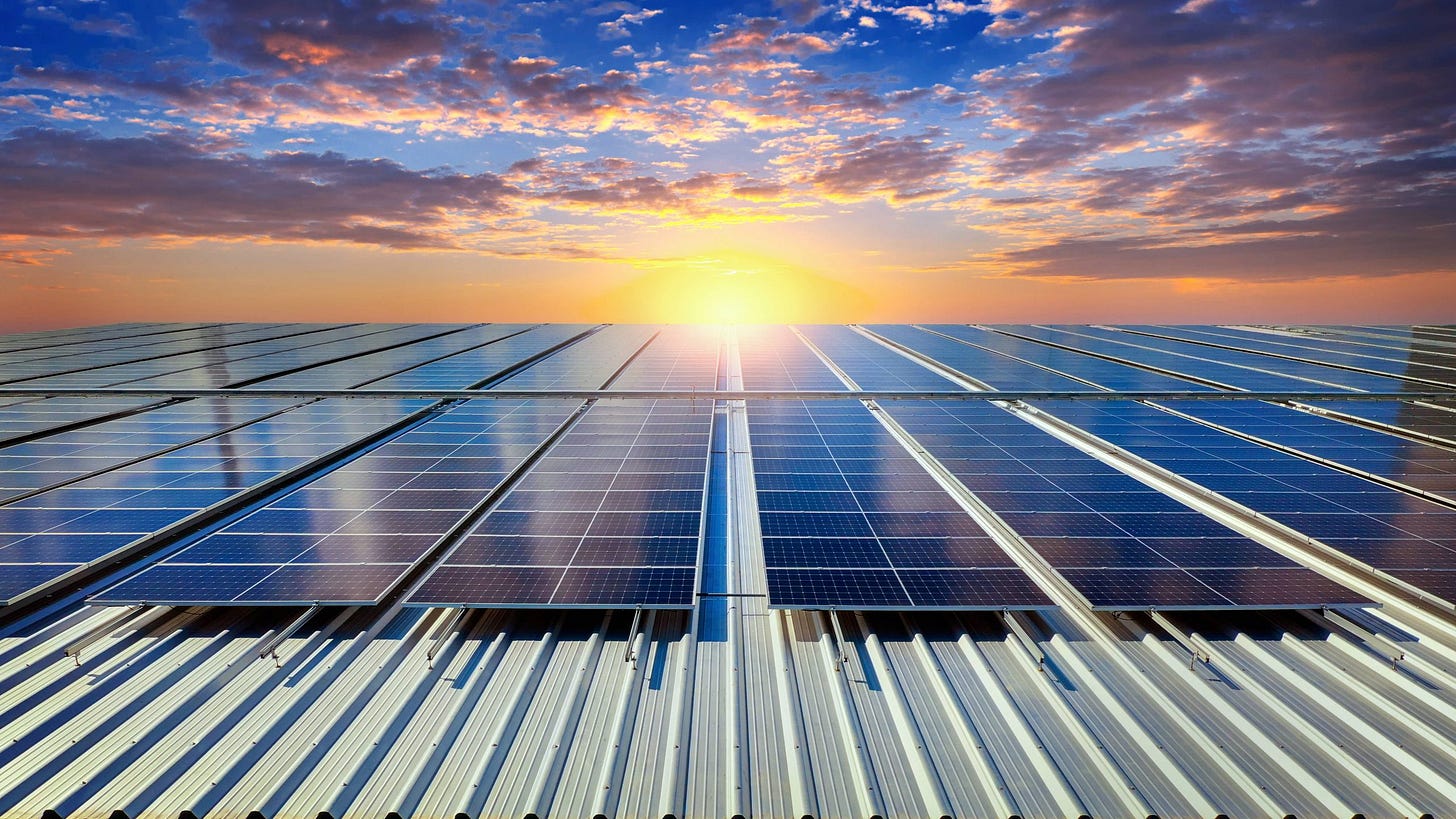
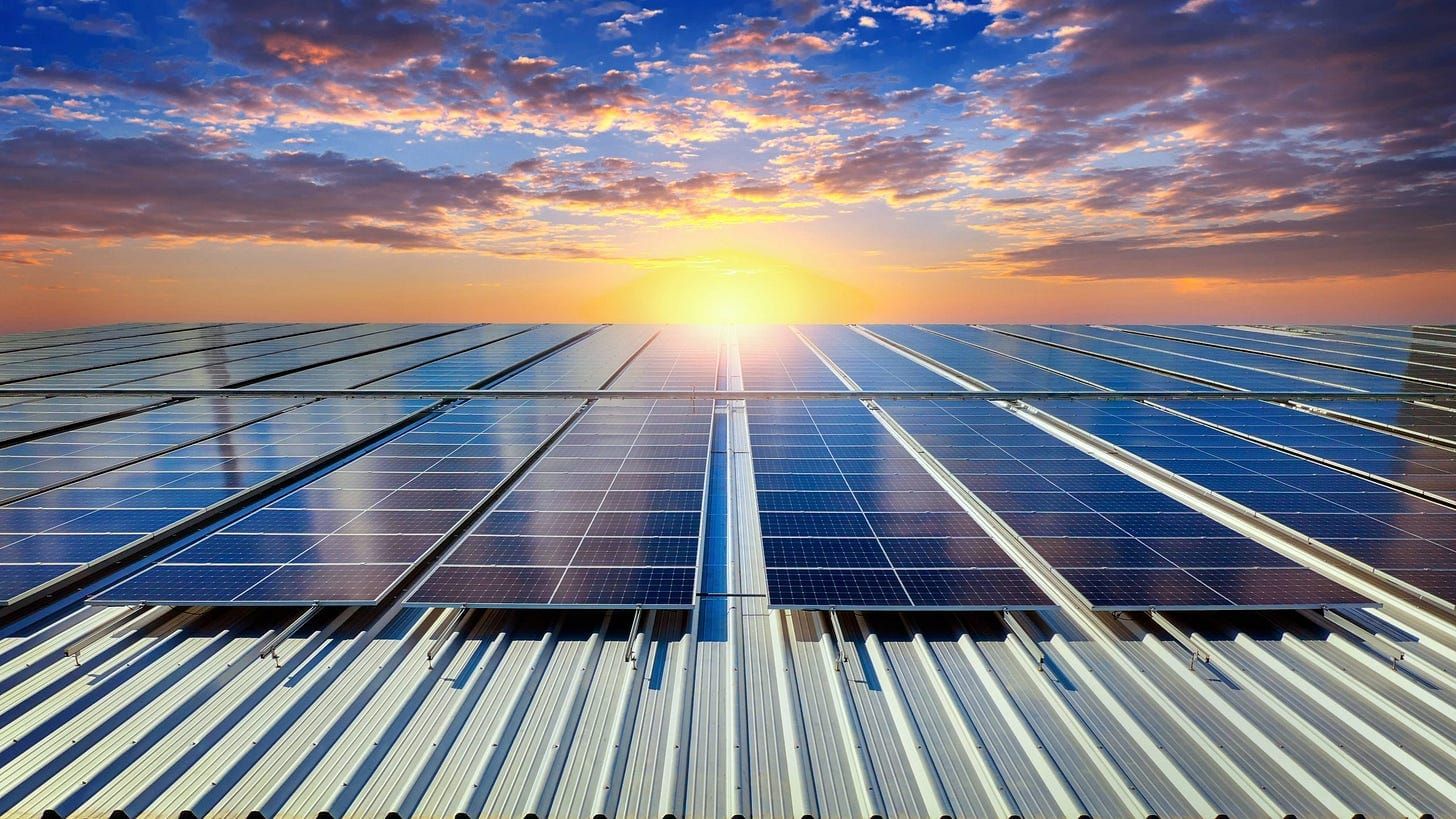
You can get a solar panel up onto a roof in a morning.
You can get a home battery installed in an afternoon.
You can roll into the bike shop any hour of the day and glide home on a new e-bike.
New Zealand’s distributed solar capacity grew 44% last year. Without any subsidy at all, enough of us were keen to make the change that an extra 258 megawatts of capacity got bolted onto the nation’s roofs.
Auckland has roughly 400,000 homes with viable rooftops. If half of them installed a standard system, that’s 1,400 megawatts of capacity and around 1,800 gigawatt hours of generation per year,
If I have my calculator working right, 1,800 gigawatt hours of generation per year is the same order of magnitude as the dry-year backup gap LNG is meant to fill. We could have it at a fraction of the cost and up and running way sooner, just by following what hundreds of thousands of Australian homeowners have already done, to great effect.
Are there limitations we would have to factor in? Well, sure. We would need to deal with the problem that the sun goes down each day and we keep needing electricity. We need to deal with the problem that in the middle of winter when the lakes are actually low, the days are grey and short.
For that we turn to the battery. Generate in the short winter days, use it at night. If you can shift 10 kilowatt hours per household from daytime generation into the evening peak, the timing problem changes shape considerably.
Two hundred thousand homes with solar and battery constitutes a virtual power station. It is also, not incidentally, two hundred thousand households no longer at the mercy of whatever the grid decides to charge this quarter.
What else goes into this could-actually-be- up-and-running-in-mere-weeks-or-months alternative?
- Decent subsidies for panels and batteries, up to the value of say a 2 billion dollar LNG boondoggle
- Free public transport for under-25s, to build different habits while the cohort that will live longest with the consequences is still young enough to form them
- Demand response payments to large industrial users who can temporarily reduce consumption
- Grid-scale batteries, of which nearly 500 megawatts are already in development or scheduled for the next two year. A grid-scale battery in South Australia was built in 100 days
- Vehicle-to-grid programmes that turn the growing fleet of electric vehicles into a distributed storage network — your car, plugged in at night, contributing to grid stability
None of this would require a new act of parliament; none of it would require a terminal at Taranaki. All I’d be looking for in place of the two-billion-dollar bet they want to make with our money would be:
- rooftop solar rebates/subsidies
- mandatory battery-ready wiring in new builds
- streamlined consenting for wind projects already in the pipeline
- vehicle-to-grid standards built into any EV infrastructure investment
- and paying people to use less when it matters
None of this needs to be seen as competition for hydro, or as supplanting our hydro inheritance. I see it as adding to our total resource, because I contend we cannot have too much of it. Every household generating its own power through the middle of the day is a household not drawing from the lakes. That water stays stored. It’s there in the dry winters when the system needs it, which is precisely the problem the government is using to justify LNG.
And that takes us on to the bigger question:
Once we’ve built enough to quickly fill the gap, where do we go next?
More renewable capacity at scale: more solar, more geothermal, more wind, possibly more hydro.
We have extraordinary renewable resources — hydro already built, geothermal still expanding, wind among the best in the world, sun falling on every roof for free.
Imagine a future where we shift our entire transport fleet over to electricity.
I’ve said it before but it probably bears saying over and over while we remain so dismally marooned in this fossil-fuelled present: an economy built on abundant, cheap, sovereign energy would be an economy with a genuine competitive advantage.
Where we end up, potentially, is not just secure but sustainably flourishing.
It probably bears saying over and over while we remain so dismally marooned in this fossil-fuelled present: an economy built on abundant, cheap, sovereign energy would be an economy with a genuine competitive advantage
Energy-intensive industries that currently look offshore could look here instead. The electrification of transport, heat, and industrial processes becomes not a burden but an opportunity.
And I should restate: none of this would be growth for growth’s sake. It would be something more durable: an economy that generates its own energy, keeps more of its own money, and builds resilience into the fabric of everyday life.
An LNG strategy turns its back on all of that. Instead it leaves us dependent on imported energy at the precise moment when independence has never been more affordable or possible.
This is what you turn your back on when you scare off offshore wind investors; cancel a pumped hydro scoping study; dump your clean car discount; and scrap your industry decarbonisation fund. This is what we have been getting from dullards professing to be the grown-ups in the room making sensible decisions and each and very one of those decisions has ended up pointing us in the wrong direction.
Everything we need to build a bright energy future for Aotearoa is available right now and getting more affordable by the day.
You would have to be some special class of fool to keep your back turned on it.
Greetings to great MTAF mate Darren Watson, on the occasion of the dropping of his new single. Fine work, sir, fine work as ever.