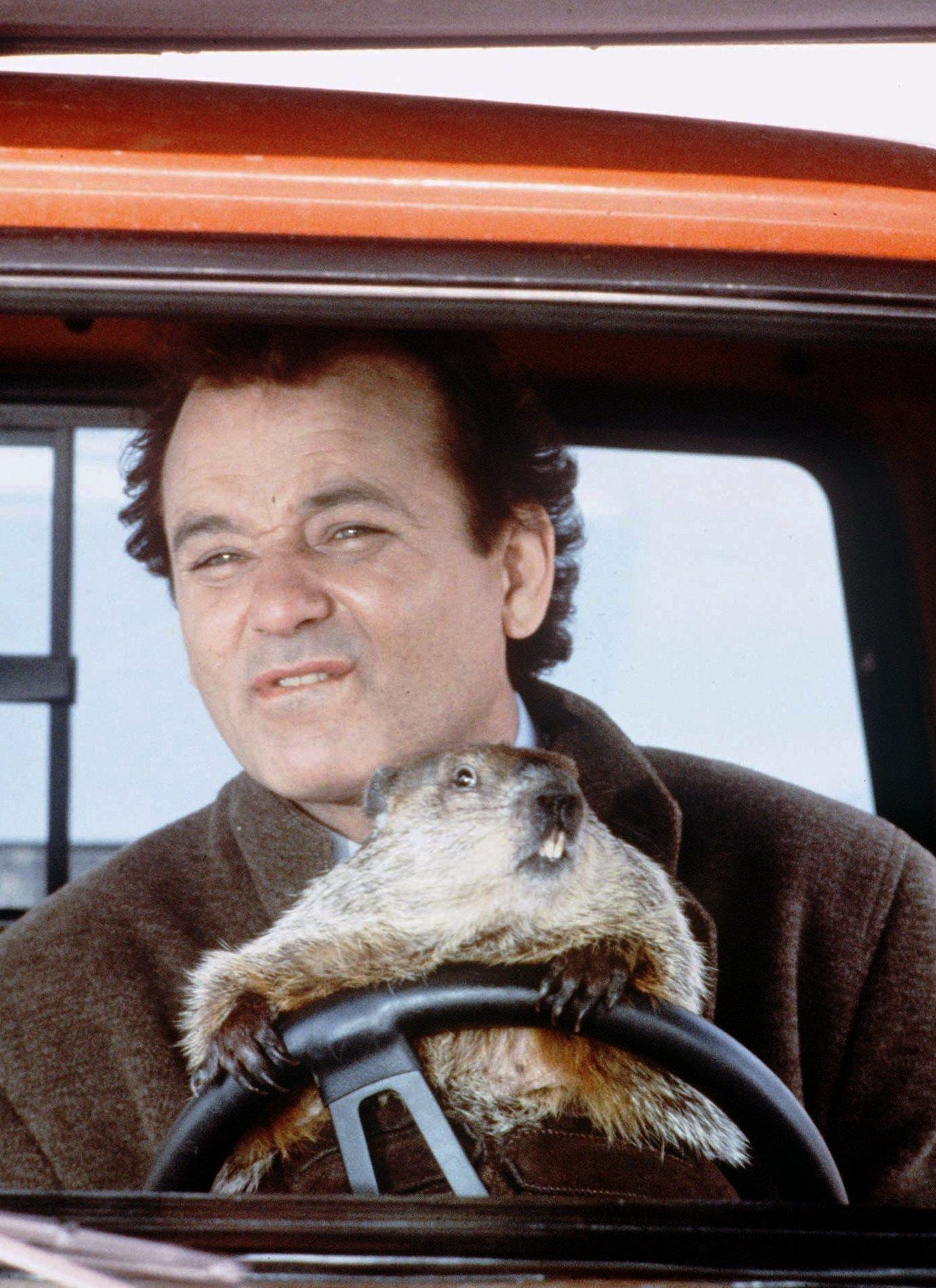
In the most excellent Groundhog Day, how many days does our jaded hero Phil Connors actually repeat before we get to the scene where it doesn’t just loop back to I Got You Babe? We don’t know. But in rough terms: heaps of them, way beyond counting.
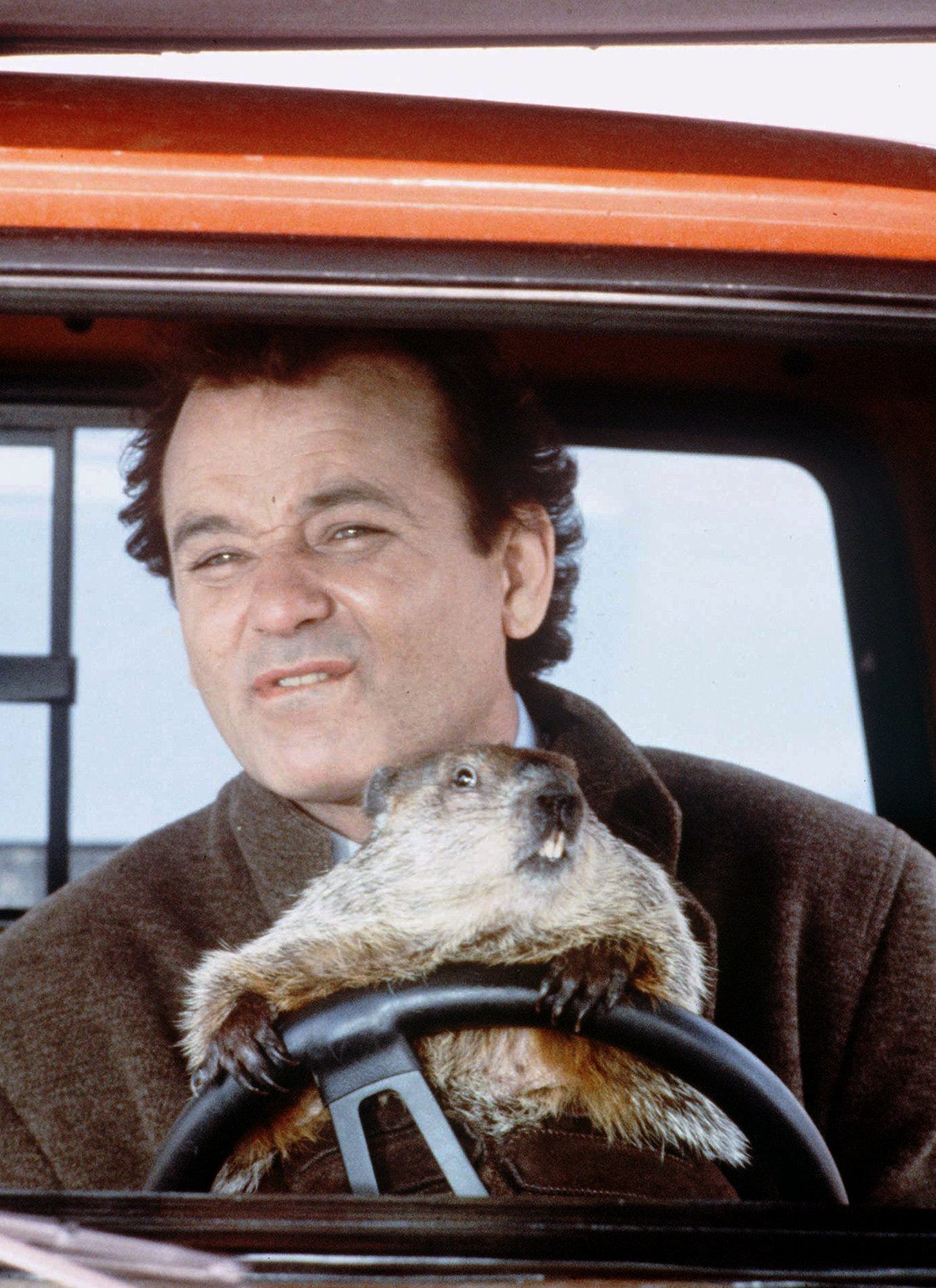
In the most excellent Groundhog Day, what finally breaks him out of the endless loop? We’re left to judge that for ourselves. But if you feel it might have a lot to do with shifting your focus away from yourself and onto the lives around you, I’m with you, babe.
How much of our political life feels like Groundhog Day? Just about bloody all of it.
Each new week, the same old arguments, over and over. Never any kind of resolution, never any kind of advance, never any kind of concordance, never any bloody sense of getting bloody anywhere.
People with shit-for-brains reckons will pipe up, and people with a clue will retort, That is such a shit-for-brains thing to say. And off we all go again. Eventually some voice of reason will step up to the mic and right-thinking will people say, Hear, hear! or, Read this!, or This is very good by Anne Salmond again.
And this will be the fact of it. Over time, as the sensible thing keeps being said, you may end up thinking surely it must have sunk in by now.
And every time you will be mistaken. Because some fresh serving of the issue will get slopped into the news cycle and people with shit-for-brains reckons will pipe up once more, and their reaction will show us that we ain’t made no ground at all, we ain’t gone nowhere.
You get it with Te Tiriti, you get it with the climate crisis, you get it with good old faithful capital gains tax.
You can even get them all in one go if you can bear to listen to a whole morning of Newstalk ZB.
But you can’t give up. You have to remind yourself that at certain points we’ve managed to step forward and stay there.
So never mind the furious objections, let’s have another go at tax, shall we?
Altogether now:
You got me, and baby, I got you.
Let’s start with the fallacy that we are highly taxed, or as David Seymour likes to assert it, with the dial turned all the way to 11: we’re the most taxed in all the world, or some such.
How about we make it a fun quiz?
There are 38 OECD countries. Where does Aotearoa New Zealand sit in terms of tax so-called-burden?
Top?
Dead in the middle?
Or bottom?
Answer: 21st. Dead in the middle.
The question isn’t whether we tax too much; it’s whether we tax the right things. We’re not overtaxed; we’re badly taxed. Wage earners carry the load while property speculators get a free ride.
Let’s also consider the objection that is not so much said aloud as implied in words like relief and burden, which is: tax is inherently wrong and the less we have of it, the better. People should bloody well pull themselves up by their bootstraps. Of course, this is a physical impossibility, but it remains a beloved metaphor of the smug and self-satisfied.
No one ever built their empire solely by their own efforts. Behind every successful business stands:
- Public education systems that created a literate, skilled workforce
- Legal frameworks protecting property rights and enforcing contracts
- Transportation networks moving goods and connecting markets
- Research institutions generating the basic science that enables innovation
- Emergency services protecting life and property
- Public health systems preventing epidemics that would devastate commerce
A least-tax-is-best mentality leads inevitably to:
- Crumbling infrastructure
- Gutted research funding
- Declining educational outcomes
- Weakened public health capacity
- Growing inequality as common resources are privatised
The National Party fetish for cutting tax rates has been steadily yielding exactly this since the Mother Of All Budgets.
Taxation is the price of living in a civilisation that actually functions.
Then there’s the implicit notion that it is unfair that the more you have the more you pay, and that a few pay most of it.
Progressive taxation isn’t unfair. Every successful economy proves that progressive taxation works. It recognises that money has different value at different income levels, and that high earners succeeded through shared infrastructure they didn’t build alone. A flat tax would be genuinely unfair because it would crush those who need every dollar while barely inconveniencing people with plenty.
Let us also consider some of the loudest voices opposing sensible tax reform: the affluent. Who are we talking about here? We’re talking about the sort of person who’s comfortably insulated from financial stress.
You don’t check your bank balance before you buy the groceries. You don’t panic about unexpected car repairs. You can still comfortably afford to go out for dinner even while you’re complaining about the cost of living. Your financial anxiety is about maximising returns, not having enough to pay the rent.
Everyone you know lives like this. It’s just normal.
And that obliviousness is what makes this all so much harder. You can’t build solidarity when the people who could afford to pay more insist they can’t.
And so to Capital Gains Tax
None of what we’ve heard this week has been a principled objection to capital gains tax. It has been the sound of a property-owning class wanting to protect tax-free speculation.
The capital that has endlessly flooded into housing has left the productive economy gasping for air while stoking intergenerational inequality and economic underperformance.
We’re stuck in a loop.
Yes, Labour’s proposal may look anaemic. But what if we just embrace it as a helpful first move, a foot in the door? God knows it’s been impossible to sell a more full-blooded version. Once people see that taxing some capital gains doesn’t cause the sky to fall, maybe expanding it becomes easier. Politics is the art of the possible.
What breaks us out of this Groundhog Day? What we really need is for the oblivious to shift their focus onto the lives around them, to take a look at what the current tax system actually does, and who it serves, and who and what it crushes.
At certain points we’ve managed to step forward and stay there. Let’s try again tomorrow.
Altogether now: You got me, and baby, I got you.