Feels nice to see things going right for one day at least, eh?
Feels nice to look ahead and imagine more of this, eh?
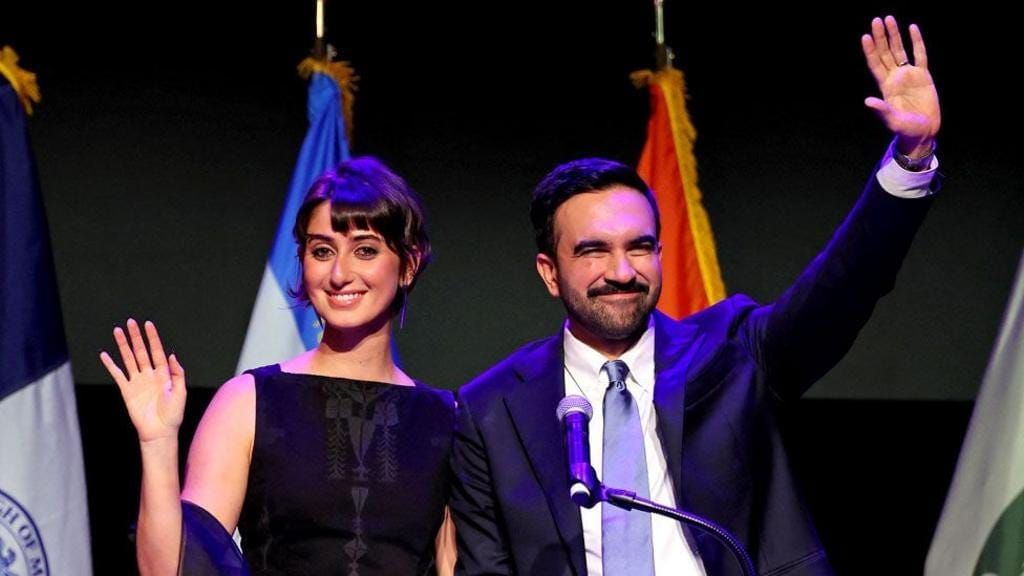
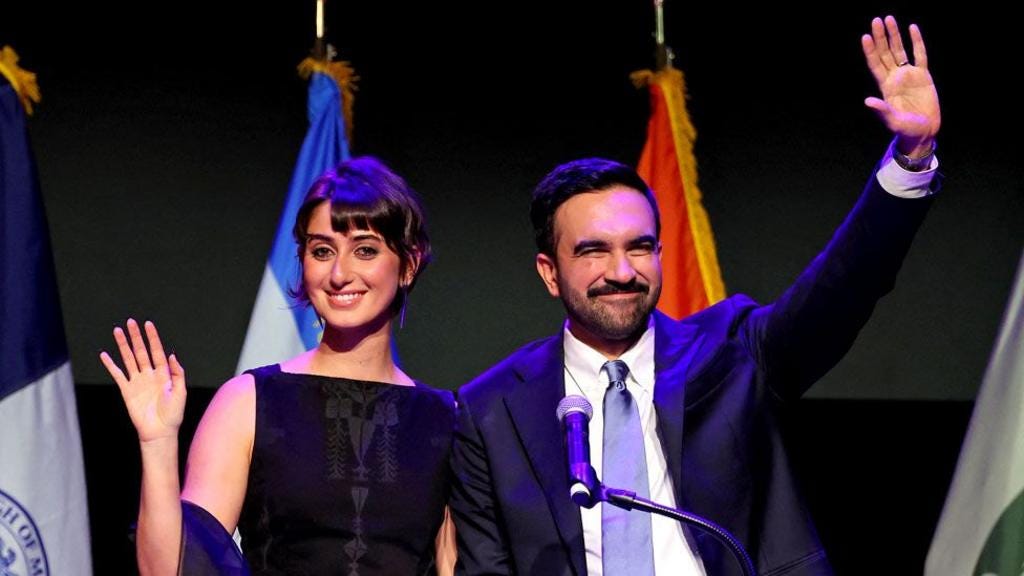
Feels nice to see someone as authentic and unwavering and compelling as Zohran Mamdani make it happen.
You could see this as proof that standing up loud and strong for progressive issues is a really good way to get loud and strong support for for progressive issues.
You could see this as proof that once more a message of This isn’t working, let’s try something else has worked really well. The drawback to that, of course, is that the same message has been effective in recent times for all kinds of wrong people too.
I’m bloody heartened all the same, because the message here was: This isn’t working, let’s try being fairer and more decent by using good socialist ideas, working together.
It is altogether more desirable than:
If this isn’t working, let’s try this guy as a dictator
or:
This isn’t working, let’s throw out every bit of progress we’ve made in the last thirty years
or:
This isn’t working, let’s try turning the free market up to 11.
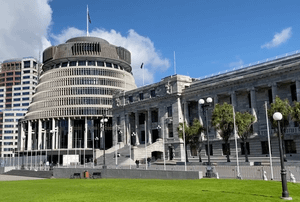
And then there is the one that the Luxon government seems to think is the answer: This isn’t working, we just need to get back to business as usual.
They love this way of looking at things because that’s what people who lack imagination love to do: stick to business as usual.
The only wrinkle they sometimes strike with this six-laned tar-sealed vision of tomorrow is an inconvenient elephant-shaped problem like climate change. Not to worry, though, they always have a cure-all: let’s wait for science to fix it.
Sweet eh, you just have to point at research papers and act like you’re being serious about the problem.
But we also know that this can let you down.
My fellow seaside villager Yvonne Powley has been thinking about such things.
She has a two-year-old Japanese granddaughter, and has just spent a month interviewing atomic bomb survivors and nuclear energy and nuclear weapon non-proliferation experts for the 80th anniversary of Hiroshima and Nagasaki.
She’s also a disaster response veteran who’s cleaned up after tsunamis in the Solomons and assessed pandemic preparedness in Samoa.
She knows what disaster looks like up close.
So she has been looking sideways at the Wellington company promoting fusion energy as our climate solution.
Is fusion really the right idea for us?
She’s not anti-progress, and she’s not anti-science. She’s seen enough disasters to know that the best-laid plans meet unexpected realities. But she’d like people to remember why we chose to be nuclear-free in the first place.
In Fukushima she saw abandoned town, houses frozen in time.
And you know what else? she says. Solar panels, everywhere.
The nuclear disaster zone has become a renewable energy hub. The place that suffered nuclear catastrophe is now choosing solar and battery storage over any form of nuclear technology.
She took a 17-kilometre walk from Namie to Futaba, through to the exclusion zone of the Daiichi Power Plant, through nuclear reality, past clicking Geiger counters and white fences surrounding bags of Cesium-137 contaminated topsoil that will be dangerous for decades, past a lone fisherman, surprised to see anyone walking through his changed world.
The damage doesn’t end with one generation. The radiation effects, the discrimination, and the anxiety can pass through families. Many survivors stayed silent for decades. They couldn’t get married because people feared their children would be abnormal. They couldn’t get jobs because employers thought they’d get sick.
She doesn’t doubt the good faith of fusion proponents, but she worries we may not be asking hard enough questions. Is it the safe, clean future its proponents assure us?
She stresses she’s not an energy expert, but that if her understanding is correct, New Zealand could develop 50 gigawatts of renewable capacity, five times our current total generation. She wonders if we really need to take the risk with nuclear at all.
I’ve been told that The Taranaki Bight alone could host 5-7 gigawatts of offshore wind. Cook Strait another 10-15 gigawatts. Canterbury gets more solar radiation than Germany, which has 65 gigawatts of solar installed.
I’ve seen what nuclear technology does to communities, she says, and I’ve seen Fukushima building solar farms on radiation-damaged land. If they’re choosing renewables over nuclear solutions after living through nuclear disaster, what does that tell us?
She was glad to be involved in forty years of striving for a nuclear-free Aotearoa. Now we’re considering opening the door for fusion and small modular reactors? What about tritium—radioactive hydrogen that’s notoriously hard to contain? What about neutron activation making reactor components radioactive for decades? What about the plutonium waste that remains dangerous for 200,000 years?
She recalls that in 2017, New Zealand granted legal personhood to the Whanganui River. The river can now sue you in court. It was a revolutionary recognition that we’re part of the environment, not separate from it.
Yet here we are, considering technology that creates waste dangerous for 200,000 years. That’s 10,000 generations. The ancient Egyptians were only 250 generations ago.
We’ve become disconnected from the earth, she says. Indigenous cultures understand we’re part of the environment. They wouldn’t create waste that lasts longer than human civilisation has existed.
Yvonne promised the Hibakusha she interviewed - the atomic bomb survivors - that she would share their stories. Their message was consistent: don’t open the nuclear door. Not for weapons. Not for power. Not even for fusion.
She dedicated her presentation to them. Their stories aren’t abstract discussions about technology. They’re about real people still living with nuclear’s legacy three generations later.
Rather than making question whether fusion is safe enough, she’d like us to ask why we’re considering any nuclear technology when we’re sitting on enough renewable resources to power our country several times over.
The money that fusion would require is money that could build offshore wind farms tomorrow, but without the unknowns and possible dangers.
She says the survivors she interviewed don’t distinguish between good nuclear and bad nuclear: They know what radiation does.