Sails full, they set out from England with not the least doubt about what they were going to do and their god-given right to do it. They took the lands for their own, they dispossessed the natives, they pushed them to the poorest margins.
This would not be forgotten, as generation upon generation of deprivation and exclusion followed.
I am speaking of course, of Ireland.
Make your way through Irish history and you will keep hearing the rhymes of our own one.
It was in the Plantation era of the 16th/17th centuries that the English really went full throttle on the aim of remaking Irish society, the better to protect themselves from a neighbour they didn’t trust, and also to make some serious coin.
These plantations entailed the confiscation of Irish land upon which would be settled English/Scottish Protestant colonists deemed loyal and trustworthy. This would be followed by Cromwell confiscating much more land. By 1660, Catholic land ownership had dropped from about 60% to 20%.
What all this would duly yield was a colonial class system based on ethnicity and religion. The resulting Protestant-majority character of Ulster endures to this day.
Sound familiar? Aotearoa in fact came late enough in the line of colonies that there were at least some people contemplating the injustices and harm already done and asking: Really, should we not be proposing some sort of treaty?
Close followers of our history will know that a treaty was indeed negotiated; that very substantial and important undertakings were given. And then for the longest time these were more observed in the breach.
Close followers of our history will also know that no matter how clear history is on this point—that colonisation has done great harm and that where we can undo that harm and belatedly honour the broken promises we really should—getting people on board with that idea can be really bloody hard.
No matter how many times you might think some progress might have been made, something sooner or later will show you all over again that the needle hasn’t moved a bit. There are people who have just been stewing, thinking None of this is right/None of this was my doing, why are you putting this on me/ I don’t believe a word of it/This is just lazy people with their hand out.
Colonisation can leave a very long trail of damage. Of course it is just one strand of many to the history of Ireland. I don’t mean to overstate anything here. But it’s nonetheless true that if it’s not too late, there’s a lot you can do to make things right, and not-too-late can be a lot later than you might imagine.
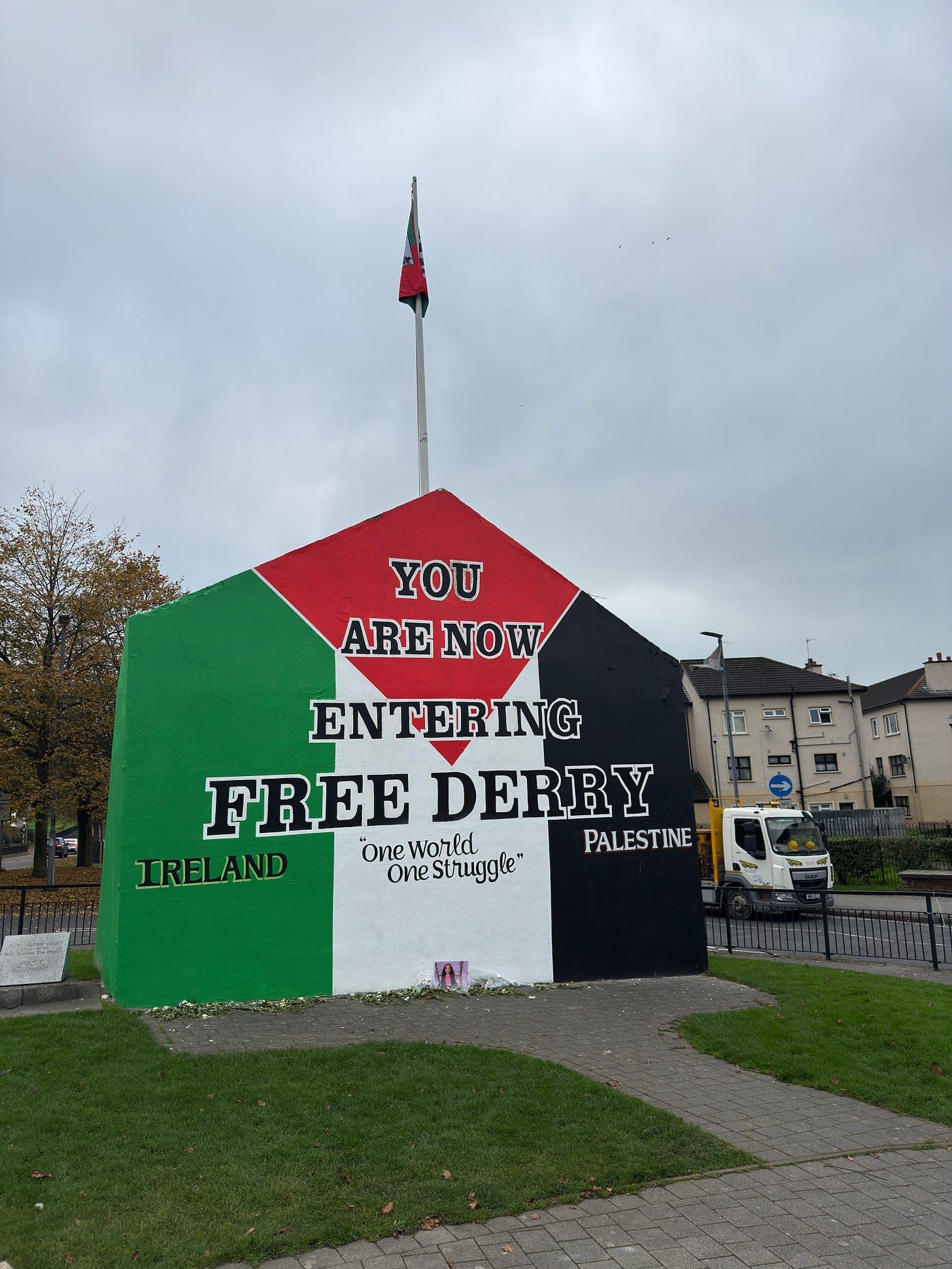
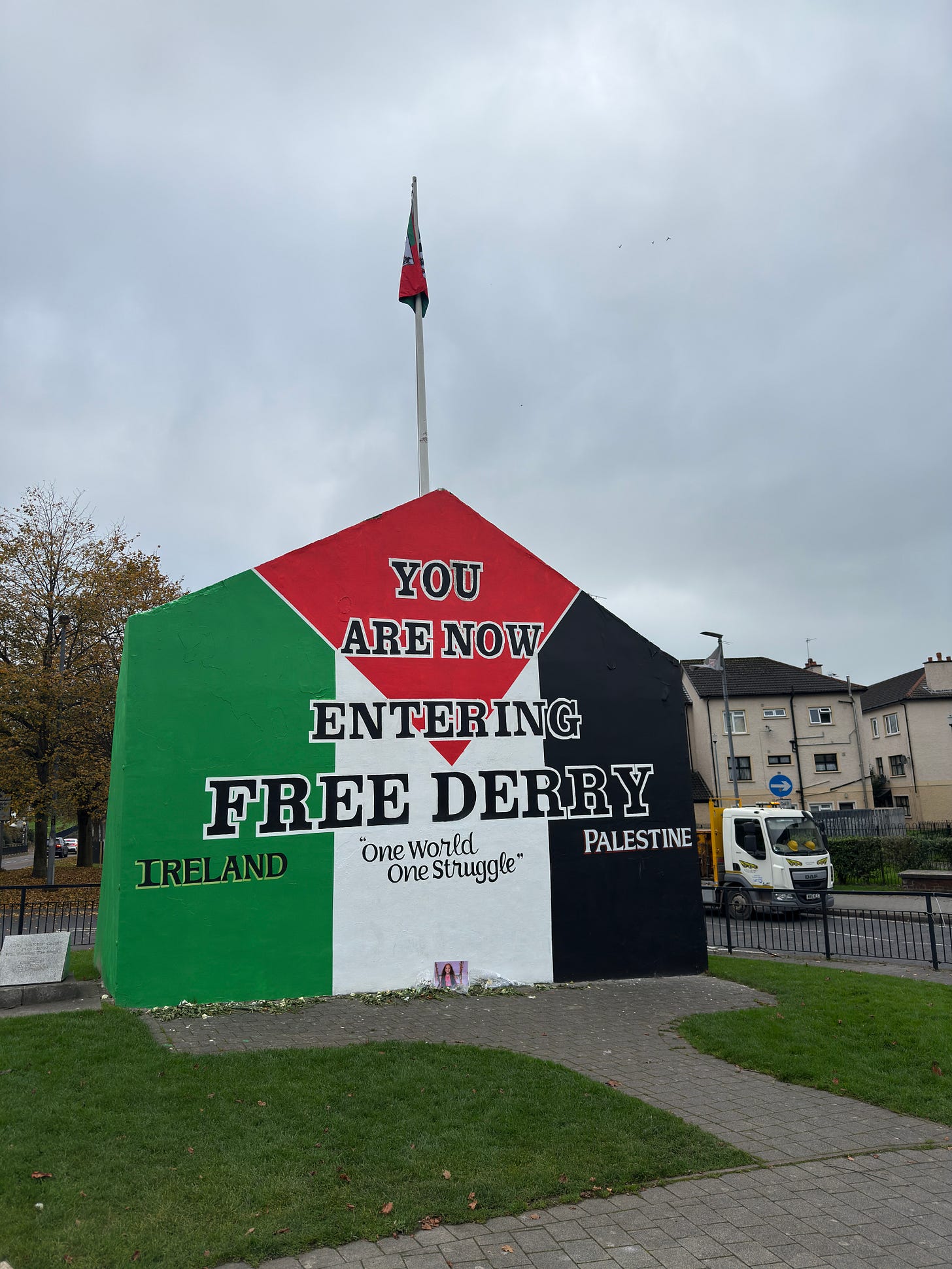
Make your way through Northern Ireland, make your way through for instance the Museum of Free Derry stepping you through the names and faces and minutes of Bloody Sunday and where that took things, and you wonder how they ever managed to find a way to the peace that now holds.
Close readers will know the name of a very good friend to this little newsletter, Terry Baucher. His family moved to England in the early 70s, away from the Troubles. Terry made his home here a couple of decades ago to become our preeminent tax commentator; his brother John, artist photographer, ever-genial raconteur, found his way back to Northern Ireland.
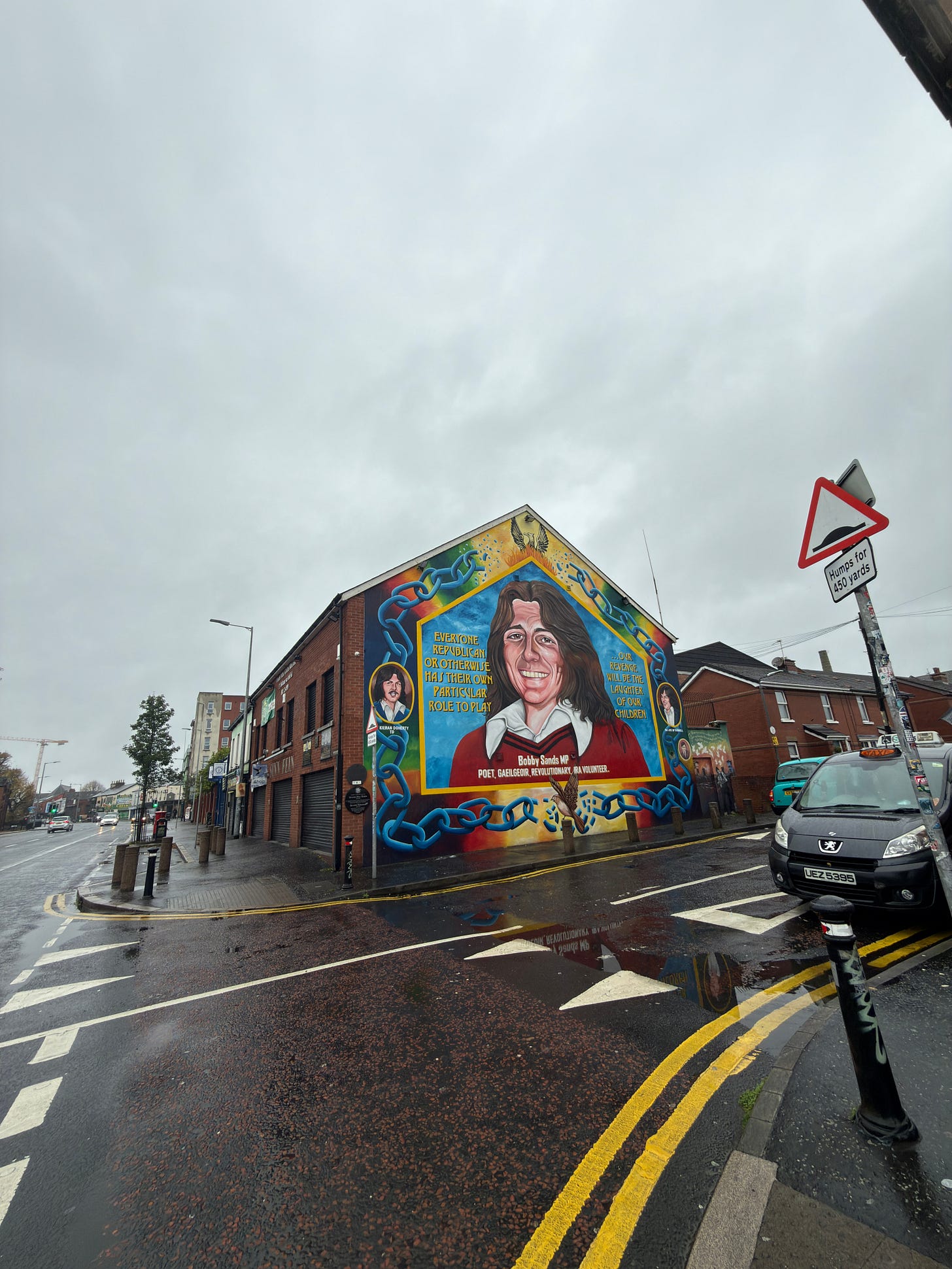
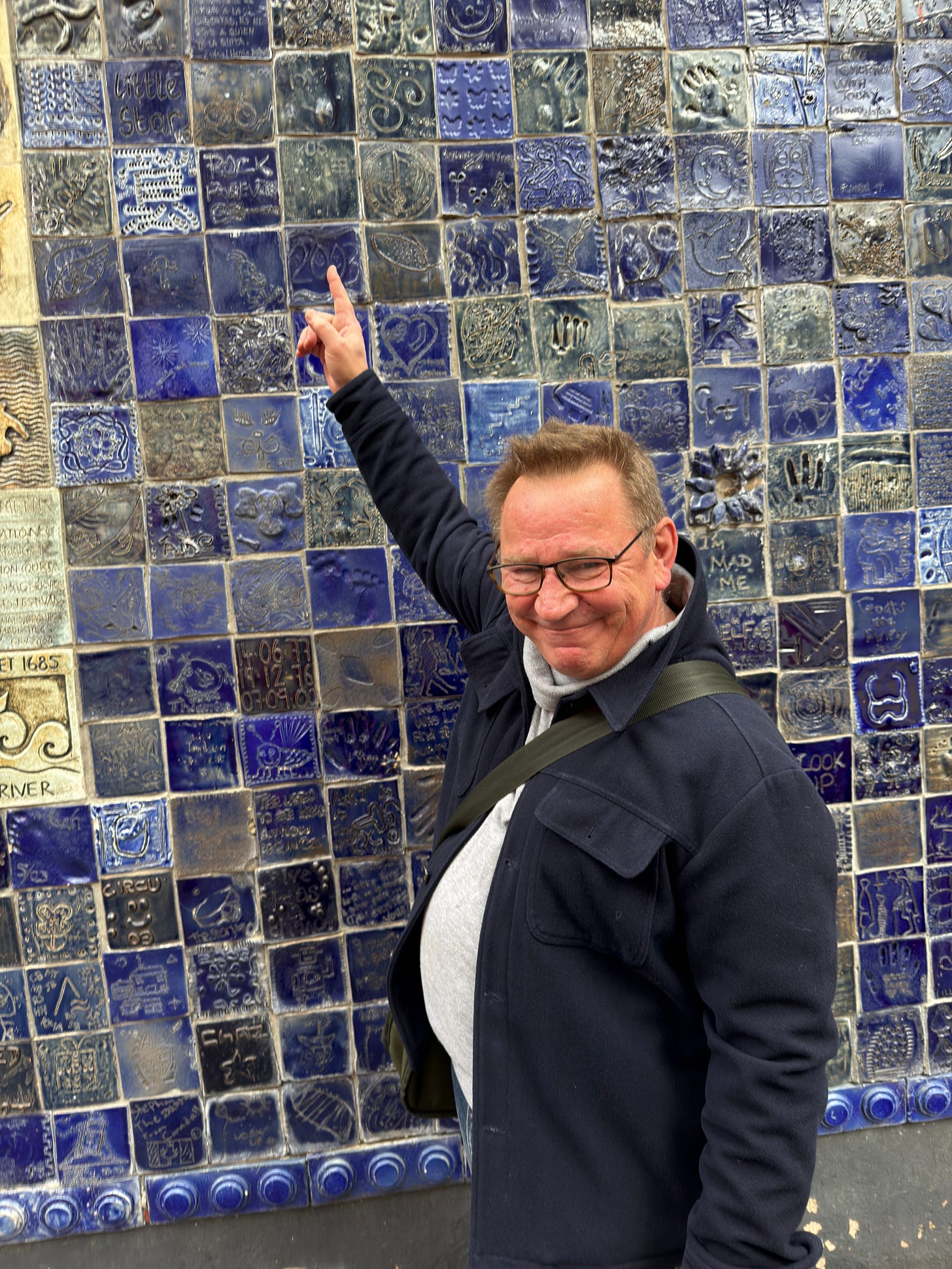
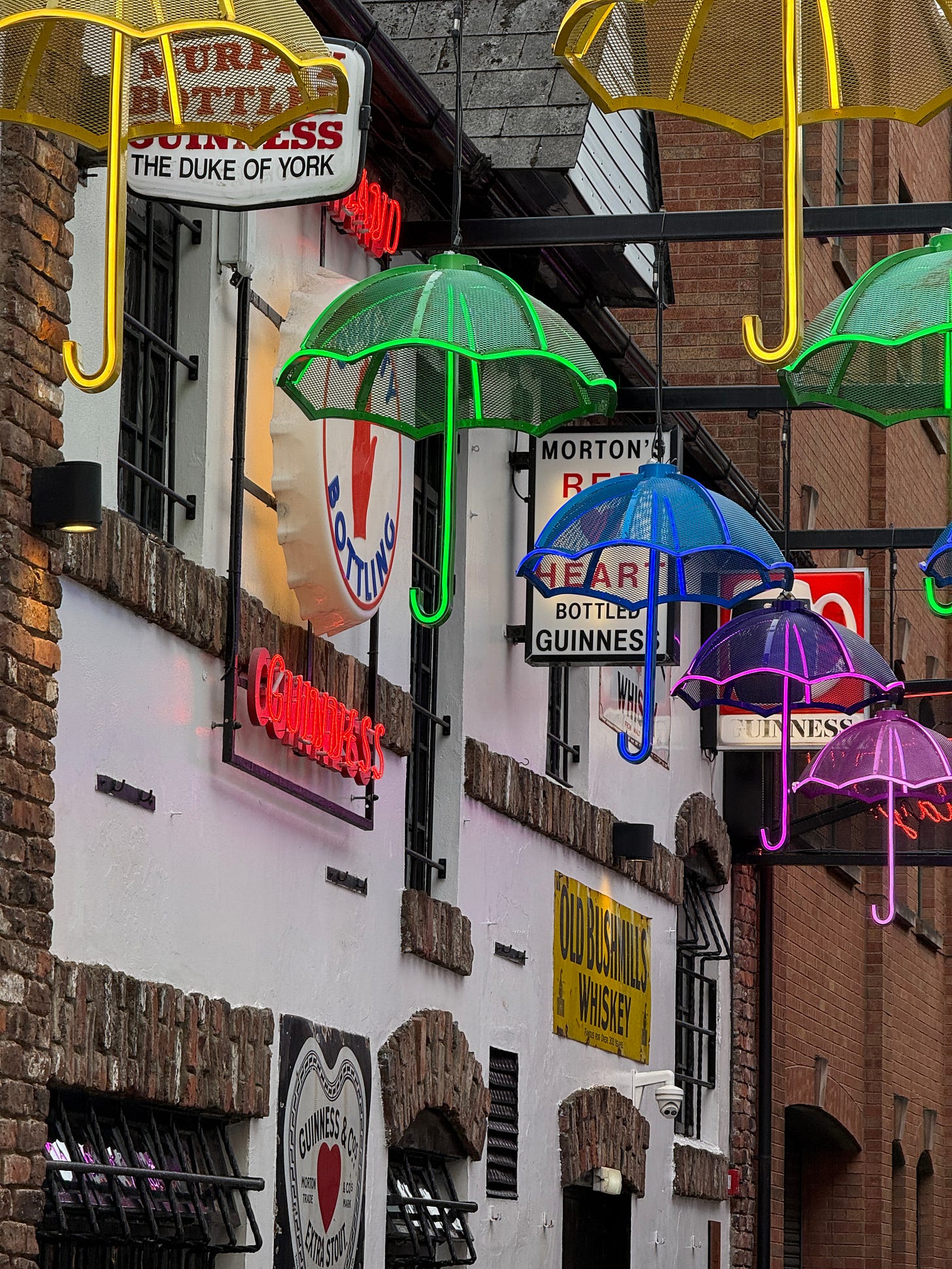
When we met him in Devonport, John had offered to show us around Belfast. We duly turned up one weekend at St George’s Market and he walked us all over, running into mates everywhere, yarning with all manner of people, pointing out one feature of art or history or politics after another, nursing a pint or two in a pub with the safety cages still outside. It’s mostly warm collegiality on these streets, it can still be, at a given moment, cagey wariness.
It’s marvellous.
As a photographer, John started working with Loyalist flags and emblems about 14 years ago—the physical objects themselves, not just the iconography. He takes imagery people are used to and puts it in artistic situations, out of context. It creates doubt, it raises questions. Looking at Loyalist cultural emblems scares people, he says, the areas where that culture lives can scare people; there are times when what he does scares him.
He’s inviting you to see these symbols differently. To undo the flag a bit, to look at what it’s made of rather than simply reacting to what it represents.
About 25 years ago he brought his portfolio to Auckland Museum and met Paul Tapsell, then curator of Māori art. A few years later he got invited to Paul’s marae in Maketu for a family reunion. Watching a British ensign flag belonging to the patriarch being carefully unfurled as the elders watched affected him deeply, and this would be beginning of his fascination with what he calls the syncretic nature of belief: the way people weave together contradictory symbols and histories into something that makes sense to them, that holds meaning.
It seems a pretty good basis for finding our way forward sooner or later. You take a bit of this and a bit of that, some English, some karakia, you make something that works, create something new from the collision.
Right now John is in Katikati with his exhibition: I Want to Be Nominated Not Kneecapped. Hugely recommended.
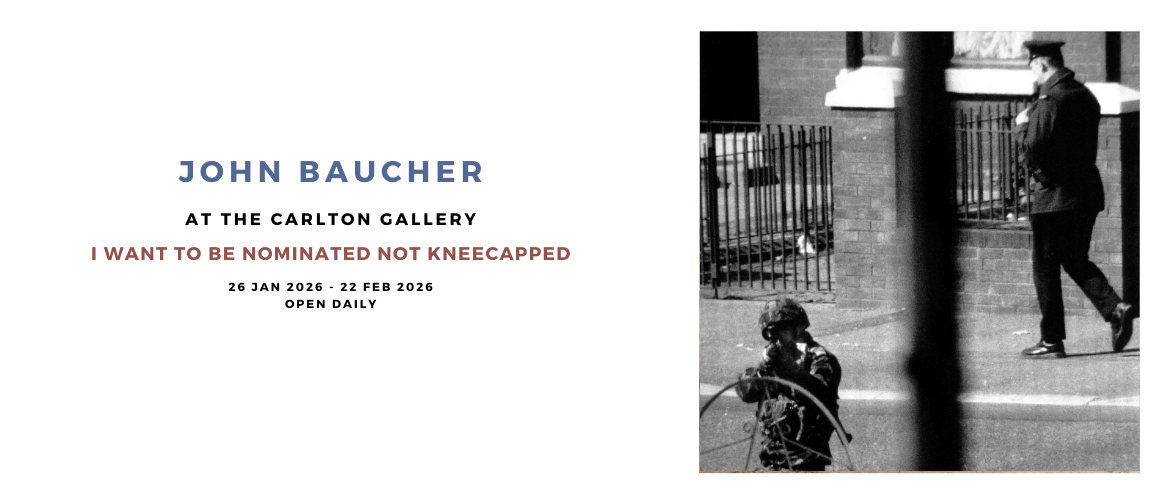
He will also be giving a talk on the 12th to the Friends of the Western Bay Museum on the yearly cycle of marches and parades with particular reference to ongoing undercurrents of sectarianism. 5:30, Feb 12, KatiKati open arts centre.
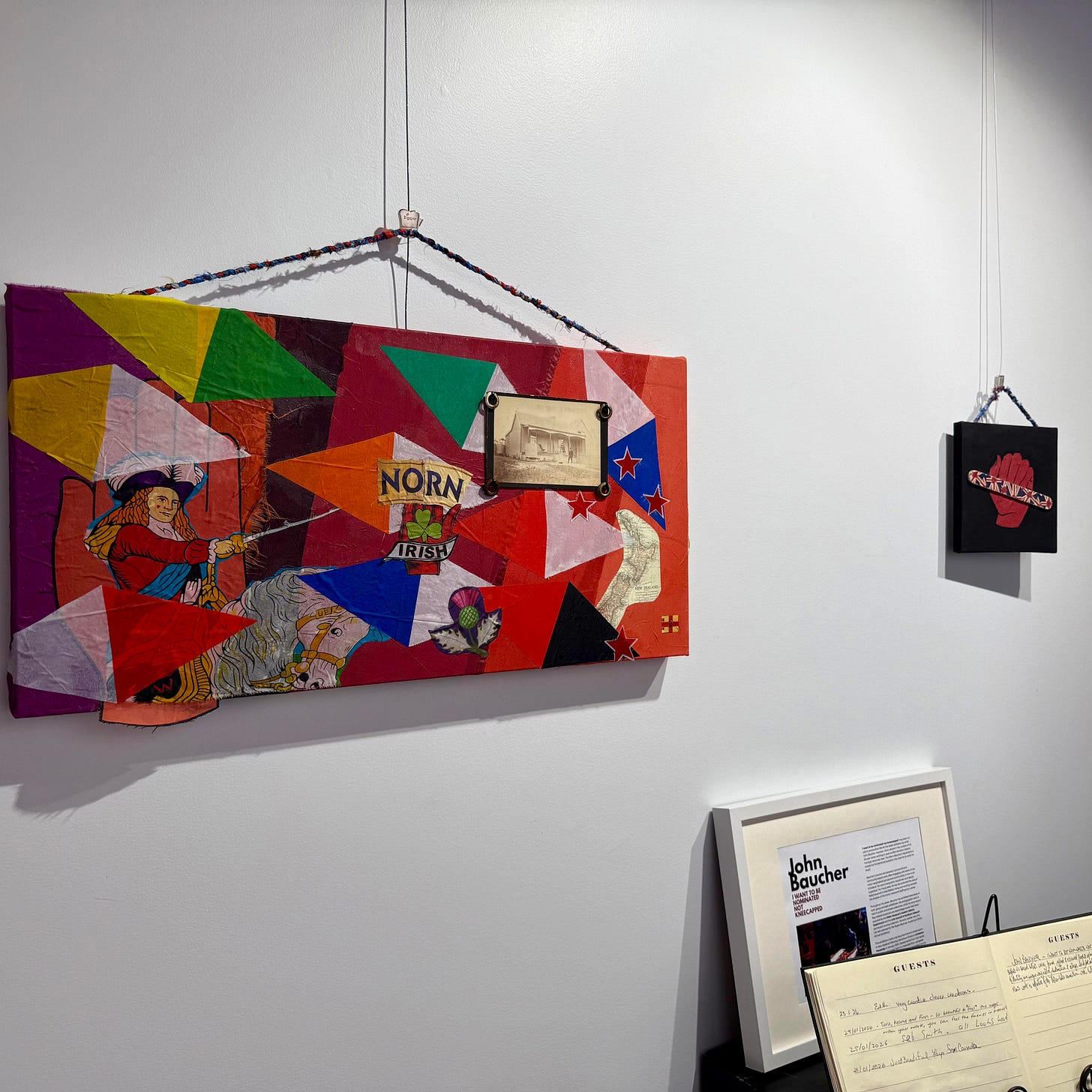
Katikati: the Ulster settlement town where Irish Protestant settlers arrived in the 1870s and settled on confiscated Māori land. Layers upon layers.
Maybe a better way forward, a way out of our seemingly grounded debates, is to do what John does with those flags: pick things apart; look at them in a fresh way; see what happens when you take symbols out of their usual context, when you examine what they’re actually made of.
What might be the syncretic possibilities that arise when you stop fighting over whose flag flies and start looking at what you might weave together from all those threads?
Flag threads can be unpicked, examined, understood differently, maybe even rewoven, not into bland compromise that satisfies no one, but into something that honours what each strand is, and creating something new.
This is what honouring the treaty could give us: the space to build something genuinely shared. To look at our contradictions and our histories and our different symbols and ask: what might we make from all of this?