What counts as history? Anything and everything. It can be Big Bang and MAGA, it can be Einstein and Eric Trump. It can be an object lesson, it can be a chastening truth.
What counts as history? What even is it?
It can be, according to your mechanic, your gasket.
As in: Your gasket’s history mate, you’re looking at 800 plus parts.
Is it reading too much into someone’s use of the word as shorthand for no use whatsoever? It’s just a feeling I get, that many people see history as over and done with, not relevant to what’s in front of us.
It’s never over; it always has something to tell us. It can be happening right now.
I can’t get enough of it. We can’t get enough of it. Karren finished work two months ago and we have been out and exploring some more while we still can, because the days will run out much sooner than you’d hope.
We have been tracing lives: kings and chieftains; maids and great-great-grandparents. We have been in art galleries and archives, museums and stone forts, churchyards and shrines.
St. Stephen’s Green in the middle of Dublin is lovely with trees and statues and comfortable benches and you can scarcely imagine it turning bloody and deadly, but right there in 1916 it did. The Irish Volunteers dug trenches amidst the flowers and the lawns, and the British forces took up positions in the lovely buildings ringing the park and overlooking the gardens, and unloaded deadly machine gun fire.
At every museum and every display about the Easter Rising you think, Did those people ever really have a prayer? And yet inside ten years they had their Irish Republic. And also a brutal civil war. And to put it that way is to barely even skim the surface or explain the layers and nuances of it all. You find yourself learning all the way across Ireland about colonisation and subjugation and marginalisation, and saying to people, You know, quite a lot of this has a familiar ring to it.
After a lifetime of only knowing the barest who, what, why of their hundreds of years of history, this was a welcome drink. Sure, but we’ll have another, thans very much.
Such a place, such a way they have with you, such a lift to your soul to be in a bar when the music lifts the roof and pulls everyone in. It leaves you with so much affection for them.
History can be universal and large, it can be small and particular. Across the sea we went, up the Mersey in the last light, to see everything Liverpool and Manchester had to show us about the Industrial Revolution, to see the piano John used to record Imagine, to see the nice green corner of Manchester where my prosperous great-great-great-great grandfather made his home.
William Slack, 1775-1830, son of a prosperous check manufacturer, grandson of a wealthy timber merchant. Imagine no possessions. I wonder if he could.
What even is a check manufacturer? Answer: someone who produces cloth. The textiles manufactured in the town and exported to Atlantic markets—the cotton and linen, the silk and worsted cloths—came to be known as Manchester goods. And from where might a Manchester timber merchant source his timber? Russia and the Baltic region mostly, local supplies having by now largely been depleted.
I said to Karren The more I learn the more I feel I’m about to collide with the slave trade. In truth, if you’re looking at anyone who made any kind of money in the Industrial Revolution, you can expect a collision.
To recap: Dad was a farmer and his father was one too, and his father before him. One father back from there was the William Upton Slack who arrived in New Zealand in 1859, having sold his farm in Cumbria; the one he’d inherited from his father William, the one whose father, also William, had made his money in Manchester and built a grand home in the Lake District.
Hope all these Williams aren’t too confusing. Still so much more to read and add to the picture. We got to archives in Carlisle and Whitehaven and I photographed like a demon. So many dusty legal documents, so much copperplate handwriting, such a thrill to find it all: troves of documents from three hundred years of a law firm’s records, family letters of another great-great-great-great, the vicar of Bridekirk.
I would be pausing now and then because a particular line will catch you, take you back, say, to the docks at Lyttelton in 1860, where someone writes of the delight of greeting his old friend Slack with whom he will be taking on a run in the Mckenzie Country.
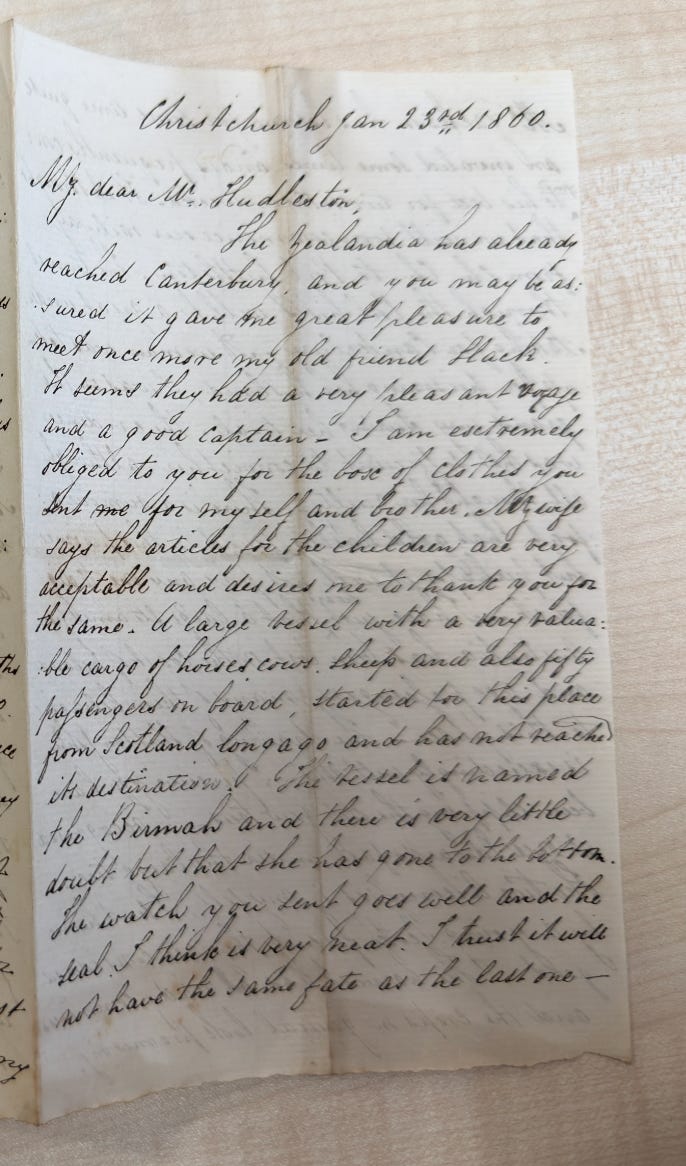
I do have aims of making a book of it all, but for now I’m still just making out the picture.
Ever more questions such as:
How long it would take to travel from Manchester to the Lake District?
Answer: two days by stagecoach.
Such as:
Why might you want to make a home up there when you had Ardwick Green?
Answer: Manchester could be a very good place to become prosperous, and it was also becoming ever more grim to live there.
How nice it must have been to have choices about that, one might say. If you were too poor to have a fixed place to sleep, your options were more like this, for four pennies a night.
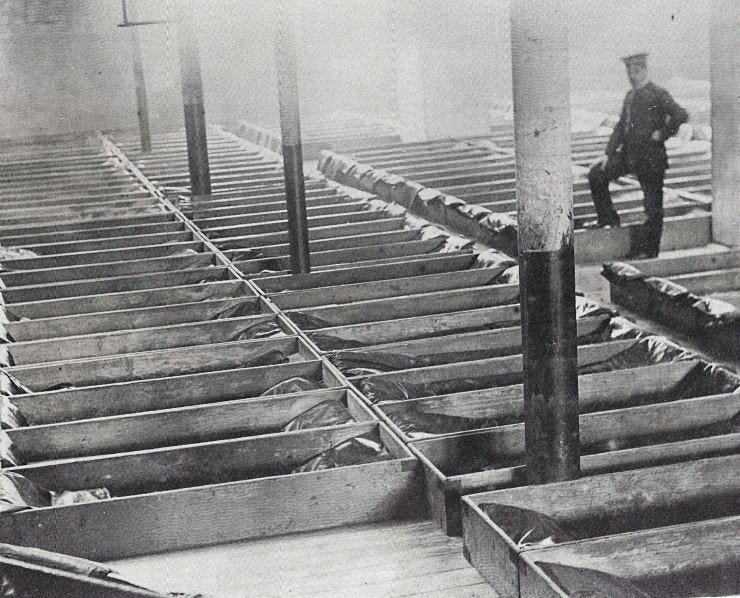
But back to the collision. Manchester and Liverpool were integral to what was known blandly as the Triangular Trade, which saw ships sailing from Europe to Africa with manufactured goods like guns and cloth, exchanging them for enslaved Africans, who were taken on in chains to the Americas, where they were sold to work on plantations, and returning to Europe with the plantations’ sugar, tobacco and cotton.
How much of a part did this play in the prosperity of Great Britain, that most noble and heroic civilisation-bringer that ruled the seven seas and was cradle of the Industrial Revolution we were taught so much about as kids? Huge, integral.
Studies suggest you can attribute a third of the profits of that period to slavery. Everything furnished everything else. Even if you took the side of William Wilberforce, you were woven into the fabric of the thing.
I keep pulling at the threads. I remind myself what history keeps reminding us: we can be admirable and we can be the greatest of disappointments; it may require actual laws to compel us to be decent.
So much did people not see anything wrong with the business of slavery and owning human beings that it was necessary to pay them out to make abolition possible. The British government borrowed £20 million to compensate the slave owners. This amounted to something like 40 percent of the Treasury’s annual income; 5 percent of British GDP. It was only in 2015 that taxpayers effectively finished paying off the debt.
What is history? It is seeing the patterns, hearing the rhymes. The Industrial Revolution gave the world a mighty economic engine, but it also did harm in ways that only ended decades later once the extra protections and rules and guardrails were put into place.
So often we find ourselves somewhere new and there will be people making a killing and they will be insisting that they are doing us all a great favour and must not be impeded: We are doing great work, do not constrain us with rules that oblige us to behave decently.
What is history? It is people blithely unaware of the part they are playing, just going about their days. Put them all together and you have whole tides of history.
In Manchester we walked from our budget hotel—three quid extra for a kettle!—past the station and on to Ardwick Green, where once there was a church and Ardwick Place. The trees were in autumn colour and lovely. The church is now a community centre and a friendly guy chatted with me about genealogy while a singing group was setting up. In the time since William Slack spent his last days in Ardwick Place, the neighbourhood evolved from affluent enclave to slum, swallowed up by factories and sprawl of Cottonopolis. Later there were Luftwaffe bombs. Later there was Margaret Thatcher. These days there is regeneration.
What is history? It is the undoing of myths and assumptions.
William and Charlotte Slack’s family of three boys and four girls found prosperity in farming, and one of those boys had three more sons who also farmed, and one of those was my grandfather who showed my Dad all there was to know about stock breeding. When all your family is living that way, you can get the notion you have forever been farming people.
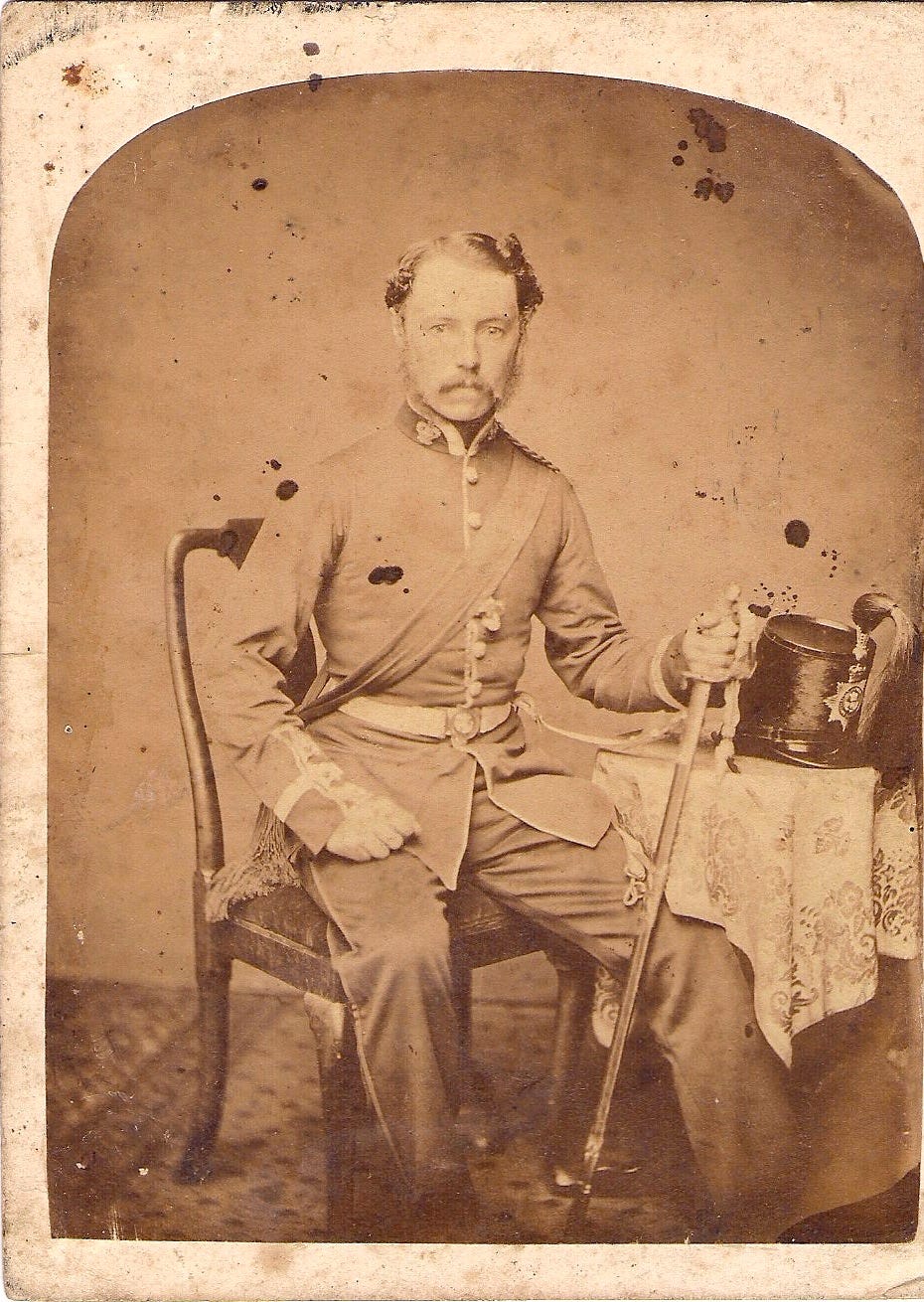
But what the wills and letters and legal documents have been telling me is: not really. A cloth manufacturer marries the wife of a prosperous timber merchant and their son, the first William, becomes a man of means with many properties in Manchester. His son, the second William, moves to a farm his father has bought him in Bridekirk, and he has a son, also William, who possibly runs the farm for a time. But when his father dies, he puts the farm on the market and buys a commission in the army. And then four years later has given up on that and is on his way to New Zealand where he and his friend take on a run in the McKenzie Country. And then he buys a farm in Woodside and is there for some decades before moving north to Awapuni. And on the surface he looks to be prospering, but on closer inspection, is that right?
Maybe a photo can help. What I see in this first photo is a man not altogether certain.
Although in this later one at this last of a life he looks content.
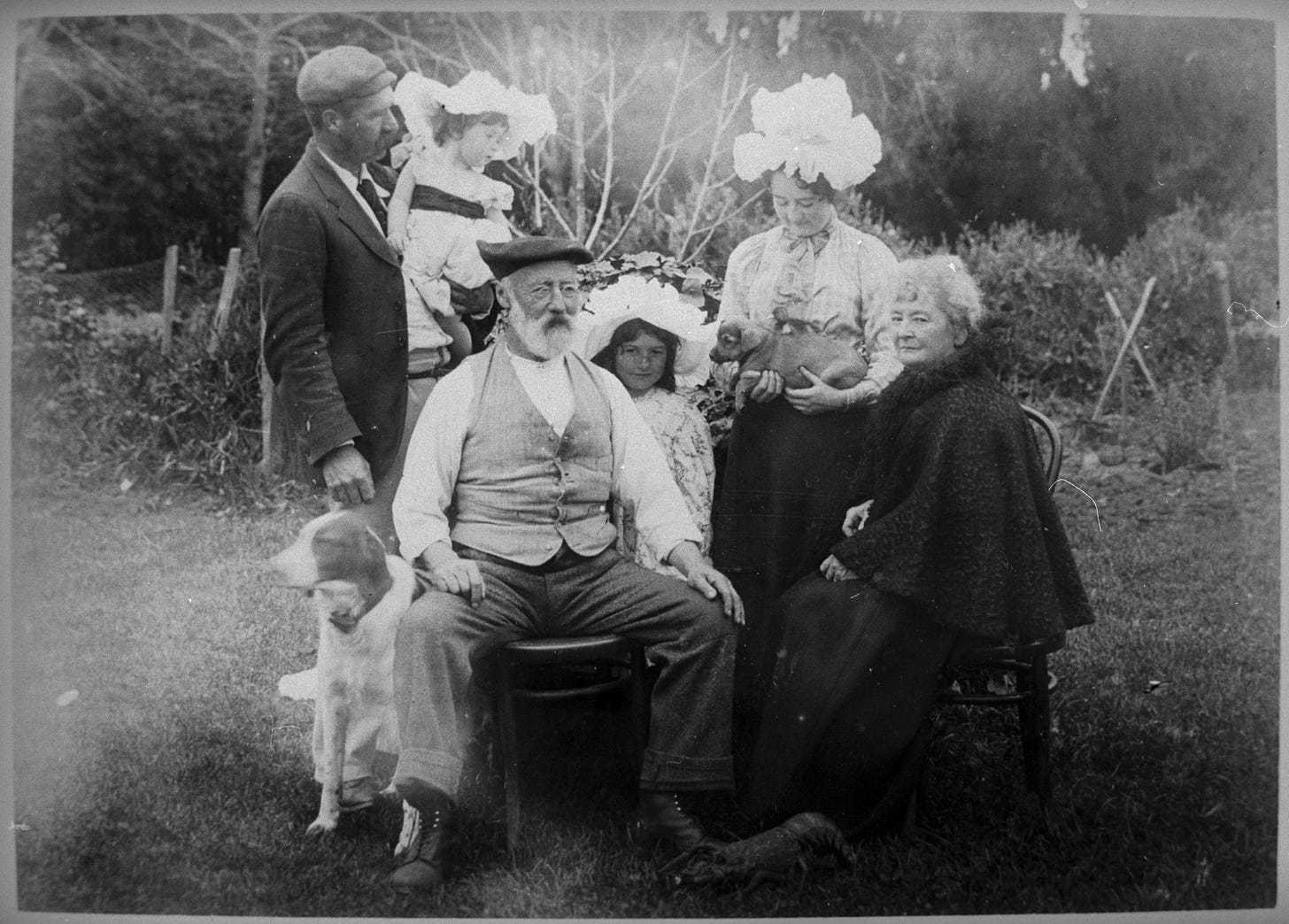
A moment in time can only tell you so much, I just wonder if he found it a struggle to emulate the Williams he was following.
A letter from a family friend to the family solicitor back in England lays this out about his money troubles: He would be mortified to know I’m writing this, but you need to know. He’s a splendid fellow, but I don’t think farming was ever the vocation for him.
A series of William’s own letters to the solicitor relate that things are getting ever worse for farming in New Zealand. Instructions to sell another and another of the rental properties in Manchester seem to paint the picture clearly enough.
Possibly I’m seeing someone who just had collided with the great economic slump of the late 1880s, but perhaps I’m seeing that other ebb and flow of life—over generations, wealth can come in and go back out again.
If your forebears profited from a great wrong, where does that leave you? Suffice to say, the money was gone by the time we got here. Perhaps that’s enough to let go of any complicit guilt you might feel. Is that a fair call? What is the place for atonement?
Some people will take it extremely personally when we talk about reparations.
What’s got to do with me?
I didn’t swindle any Maori out of any land
I wasn’t there for the slavery.
Maybe the most constructive approach is see it as a collective obligation: no individual is held personally accountable but everyone is complicit. At the very least, surely, what we should hope for is the fullest accounting of what happened and, if it’s not too late, trying to make whole those who have been harmed.
What is history? It is successive drafts of the news — who, what, where, why, and how — written better, more of the picture filled in, the removing of the unconscious framings, the presumptions.
It ought to be ever more expansive and always ready to recognise what we got wrong.
Some of us prefer a more edited version. Some of us have been getting quite rowdy and insistent about it in recent times. Some of us prefer chest-beating affirmation.
This is surely what David Seymour is getting at when he argues for a history that recognises only the good that was done, that doesn’t dwell on colonisation and such things, that would fail to tell our kids the first thing about what we’ve lived through, and who we are and how we got here.
As ever, he is offering an empty echo of what other people elsewhere have been saying, people who wear their supremacism a bit more brazenly on their sleeves, all the way up to: slaves had a good life, and you say Nazi like it’s a bad thing.
The idea you’d leave anything out is just so wrong.
There is never a full story. There is never a completed picture.
You keep reading, you keep digging, you keep trying to colour in the picture.