The feeling can be expressed in many ways, but I especially like this one:
I dunno man I feel like we heard all the Nazi arguments 80 years ago, and then we executed them for their crimes
What makes people vote for a Trump, an Orban, a Farage?
One obvious answer is: the toxic online culture that was notionally going to bring us closer together but is instead driving us ever farther apart.
Other answers are also true. There are all kinds of reasons.
But there’s one so simple and obvious we can forget how much it can matter, namely: the goddamn cost of living. As in: Man, can you believe how much all these things now cost?
I’m expressing that in the language of the comfortable middle class, but there are more anguished ways in which people are telling it.
COVID didn’t only bring death and discord; it also brought inflation pretty much everywhere, although many voters seem to have the idea it has been so much more where they live, hit so much harder in their own country, by whoever was in charge where they vote. For some people, life’s a beach, like it’s never been before; for many, things are not at all good.
American economist Isabella Weber, writing about Zohran Mamdani’s barnstorming win, puts the cost of living and what’s to be done about it, front and centre.

She offers research that shows how very much more it can mean when you’re poor. When prices go up for basics, people who don’t have much or anything to spare feel the pain far more than the prosperous. The poorest of households have seen their supermarket bills, power bills, and rent eat up ever-larger chunks of their income. The richest have barely felt it. Not only that, they have been happily fattened up by the extra profits the price rises have brought.
People can feel that something is deeply wrong.
When people can’t pay for their food and power, and some demagogue promises to smash the system that’s failing them, they may well give them their vote, not because they’ve come over all fascist, but because nobody else seems to be offering them a solution.
This, I humbly submit, is where my arguments about free stuff start to look less like a hippy indulgence and more like a constructive political solution.
To recap my proposition. We should stop treating essentials like energy, housing, transport as market products, and instead treat them the way we do parks and libraries and education: free to all, as the bedrock of a decent society.
For example. Energy. Everyone gets enough to meet their basic needs. Nobody has to choose between being warm at night and eating.
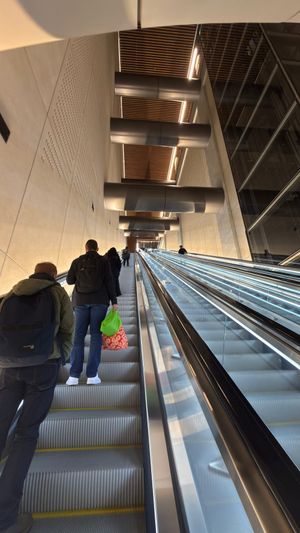
For example. Public Transport. Make it free, or near-free, and the second-biggest household expense disappears.
For example. Housing: We treat a home as a right, not an investment vehicle.
When you make services universal, you jump past the divisions of deserving and undeserving, users and freeloaders, us and them. You don’t just remove the economic desperation that makes authoritarianism appealing, you make a start on a fresh sense of shared prosperity. Free buses, for example, don’t just help the person who takes the bus, they reduce traffic for everyone, they cut emissions, they lower road maintenance costs, they make the whole system work better.
There’s no question that some voters are embracing bigoted, misogynistic, patriarchal authoritarians because they’re fully into bigoted, misogynistic, patriarchal authoritarianism. But it’s also pretty apparent that some people simply ticked that option because it felt as though they were drowning and no-one cared.
The best response, as Zohran Mamdani has so reassuringly demonstrated, is to enthusiastically and without apology offer bold interventions that materially make people’s lives more secure.
You make basic rights genuinely affordable through public provision, you don’t worry at all what bigoted, misogynistic, patriarchal authoritarians have to say about it. And if it helps, you can even quote Harry Truman.
Socialism is what they called public power.
Socialism is what they called social security.
Socialism is what they called the growth of free and independent labour organisations.
Socialism is their name for almost anything that helps all the people.