7.15am
The morning is so full of negativity I decide to pretend it’s not happening.
When the radio gives you only people with faces of sucked lemons, turn it off. Go looking for lemonade.
7.25am
Breakfast is served. Please enjoy this refreshing lemonade. It’s not generally how I go about writing but today I’m considering it, oh yes I am.
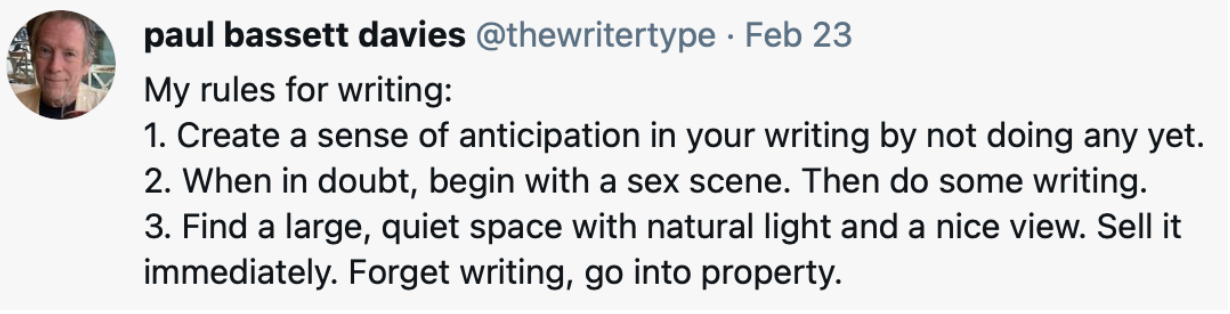
7.55am
Treaty issues; race issues, this is what I’m vexing about. So much calculated cynical negativity, so much bad-faith politicking.
Judith Collins, for of course it is she, wants to have a conversation.
What about? He Puapua.
And what is He Puapua?
It is, depending on who's telling the story:
- A Te Puni Kōkiri report that explores how New Zealand might fulfil indigenous rights commitments it made a decade ago at the UNOr
- A separatist stealth bomber about to carpet bomb us in our sleep with Māori co-governance and also seize all the West CoastDOC land
- Pop-Up leader has a map to show us how much that is, just heaps, imagine that, having all your land taken off you god how might that feel?
She’s saying: the report recommends a conversation, I want one please Prime Minister Jacinda Our Lady of the Chippery thank you very much.
A request for a conversation can be a sincere request for an open and exchange, in the hope of learning and deepening understanding, and reaching a position advantageous to all parties.
It can equally be nothing of the sort and code for something else entirely.
For example:
- We need to talk, meaning: this relationship is utterly doomed
- We want to shut you bastards down by bludgeoning you with dog whistling and misrepresentation of the issues in venues of our choosing, including but not limited to: Mike’s Minute; reactionary ‘opinion’ pieces in the Waikato Invader; and hamfisted memes on Twitter
Pop-Up Leader, to give her due credit, often likes to play it as though it's a sincere request as well as one or more of the others, all at the same time. This is when her eyebrow truly brings its A game.
8.15am
Not everyone is being dismal.
Bennett Morgan writes
Every NZer should be mad that we constantly fail to live up to the deal on which the country was founded. Like it's no more complex than that for me and it's weird that it is for others
Felix says
If I went off solely my own lived experience, I would think the police were all really nice people and society mostly treats everyone the same…... It pays to listen to the perspectives of others.
8.20am
I wish to convey my thoughts by turning to Chapter 16 of a book I wrote in 2004. But first I wish to make a Public Service Announcement.
8.44am
Having my haircut, when important medical information comes to mind. In the midst of describing poor broken down Dave in hospital I remember some highly pertinent information. The medication I was prescribed last year for diminishing the prostate has a very notable side-effect: it stops hair loss in its tracks.
Karren’s reaction to this news, more than once, and possibly as many as five hundred times already has been: just imagine if you'd seen the specialist ten years sooner.
Readers approaching 50, please take my advice. Ask your urologist if Finasteride is right for you, or at least what remains of your hair.
10.45am
Never mind today’s reading on Nine to Noon, let’s open a book from the Orewa speech days, namely: Bullshit Backlash and Bleeding Hearts, Slack, Penguin, 2004.
Chapter 16. “If We Don’t Put a Stop to This They’ll End Up Running the Whole Show.”
Although we don’t have civics classes in our schools as they do in America, we do all prize this principle of democracy: one person, one vote. We don’t much like the idea of the numbers being stacked. So when Dr Brash says “The Treaty of Waitangi must not be a basis for giving greater civil, political or democratic rights to any ethnic group. The present Government is doing that,” he tends to get a good hearing. Can’t have that. If it were true, he’d have a good case, but it’s the same problem again. When you look at what’s actually happening, we see that this is a case of a man crying “fire” when someone’s only lit a cigarette. Let’s take a specific example: local government. Dr Brash has asserted that:
“In local government, Maori wards are undemocratic, and special consultation with Maori gives iwi veto power over many job-creating development projects. National would remove these features.”
If that seems like tilting the table, then what do we think of rural wards for councils? They make it possible for small communities with special needs and concerns to get an assured representation that isn’t crowded out by the bigger votes across the whole voting area. Should we have a go at them as well for being undemocratic?
You might be wondering about Environment Bay of Plenty. That’s the regional council that asked the government to pass legislation to set up Maori representation on the Council based on the Maori electoral roll. Why did they do that? Well, take a look at these national voting statistics. In 1992 only 2.5% of people elected to local councils were Maori. In 1995 it was up to 3.5% and in 1998, 6%. In 2001 it was back to 4%. The voice isn’t there. Environment Bay of Plenty saw a problem in that. They thought there ought to be Maori members giving the council some guidance when it had to consider Maori culture and values under the Resource Management Act. This legislation wasn’t forced on them by the government; they asked for it. It’s not compulsory – a council can choose whether or not to use it. In other words, people weren’t voting Maori onto the council. The council - which had been voted on - wanted to have Maori working with them. They asked for legislation to make that possible. People’s democratic rights are hardly threatened by that.
What about this veto power claim Dr Brash raises? Well, that’s really making the mistake of confusing the right to be consulted with the right to turn a proposal down. The body that makes that decisions is the one it always has been under the RMA. When you make a resource consent application to build that extension to your house, it’s the consent authority – your local council, for example, that makes the decision in the first instance. Then, if you’re turned down and want to appeal, it’s the Environment Court. But it’s not Maori. If they don’t like what you’re doing, they have to persuade the authority with a satisfactory case. That’s not veto power, that’s the democratic process. Now, he may argue that the possibility for a little quiet greenmail behind the scenes amounts to a veto power. If that’s so, surely the solution is to change the way the act works in order to bring those practices out into the light. But doing away with the right to be consulted would be just plain undemocratic. You don’t want to throw the baby out with the bathwater.
The trouble with aspects of this area of the debate is that it carries us back into that uncertain area of Treaty interpretations – the power Maori signed away under Article I of the Treaty – kawanatanga - versus the power they retained under Article II - tino rangatiratanga. Over the past decade or so, you’ve seen various efforts in various government bodies to make room for Maori, in line with the idea of recognising Maori rights to have a place at the board table. In some cases it’s had that token look to it that was no good for anyone, as Moana Maniapoto describes:
Where once there was the thought that you’d just plonk a token Maori in as advisor, some organizations are getting to grips with the idea of doing it properly. Moana Maniapoto offer this example:
“My experience is that putting one Maori on a board of non-Maori to represent all Maori views does not work. But if you have got a strong policy, a brief, like we have with the tobacco control strategy and you have got a body to advocate it, then you’re parallel and you have got something to work with. Otherwise you get some poor Maori stuck on a board, that’s meant to be the be-all and end-all of everything Maori and they have got no policy to [advocate]. They are just going on their feelings and anecdotal stuff….”
“I was on the smoke-free coalition, just one Maori voice, but nothing tangible to advocate on behalf of, no research evidence-based. When we finally got our policy, our priorities were different from the Pakeha coalition. Bit of a bummer…So we had a few teething problems, a bit of tension there between opposing priorities. But it’s all worked out. In the end, we got our cessation programmes and the Pakeha agencies have acknowledged that that was right and correct and they are very proud of the success. If we had just floated around with one person sort of saying oh I think this and oh I think that, then..there’s nothing, no basis, nothing robust. It’s just to say well 200 people around the country reckon that this is what we should be concentrating on. At least you’ve got something to go on.”
But she sees a possible retreat being beaten as the debate picks up:
“one of the fall-outs for me is that – and it is a direct fall-out, I believe, of what Brash has done on it – is that I tried to use the health model to form a Maori music industry coalition to try and bring the Maori music industry, to develop it economically, and so we formed a coalition because at the moment you have got a New Zealand music commission which, they might have a Maori observer go along to ... I don’t know what that’s meant to do. OK, so. And that’s been it. There’s never been anything formed to represent or advocate for Maori. We have talked to the independents. We have talked to the majors, and so what.”
“So what I tried to do was to set up a coalition with a whole lot of keen Maori music players, producers, artists and that, and look at identifying a set of priorities to move the Maori music industry along. That’s everybody who sings in English and in Maori, because particularly that’s where we find it challenged. And to develop their own kind of national Maori music strategy because there wasn’t even a national music strategy.”
“So we talked to all the various Ministers involved and the Prime Minister and Judith Tizard and they were all very supportive, so we started this thing up, and we went on the music export development group, which Anderton started up and…it was really choice. There were 17 people there and a real breadth of knowledge. Brett Hansen was there and all these guys from New York…It was good. And those people understood the need that I was expressing and the right of Maori to be able to form their own body and advocate their own policies, identify them, because that was all going to be very helpful for everyone else as well.”
“And so we were well on the road to being able to work within the industry and we’d formed all these relationships and all that and Brash comes out and all that potential source of funding dried up. Just like that.”
“…it’s easy, everyone loves music, it’s glamorous, it’s not hard…and that’s what we were after. We didn’t want just a nice let’s-all-feel-good about NZ music, but we actually want to see Maori musicians make money and be economically successful with their studios and all that. But I doubt that’s going to happen now.”
This is largely a question of power–sharing, and Alex Frame points out that if you look at the Treaty relationship as one of cooperation, rather than partnership, it becomes much easier to work out how to share that power.
“It’s not that the Maori voice is going to be half. In some matters, such as the future of language, the Maori role is going to be determinate. So it cuts both ways. However in the deciding of national issues, such as matters like immigration, nuclear policy and so on, democracy must run its course. To dangle some illusion that this can be one race one vote is not only dangerous but it is in a sense a cruel deception. Because it couldn’t possibly be so.”
I asked him about the question of devolving power in areas like health and education.
I think my starting point is always going to be cooperation. So at all points as I think about policy, I'm going to be saying right.. Government can say we want to work with Maori. Let’s talk specifics, let’s not have a mechanical model. If it’s to be health, if it’s to be education, let’s sit down, let’s look at the problems we face. Sometimes it may involve Maori managing some things. Sometimes it might be a question of shared management, sometimes it might be a question about consultation and sometimes it might be a question of approaching matters on a global way so that when we look at a problem we might say this is therefore a matter which should be managed in an overarching way in accordance with the normal processes of democracy.
Let’s look at some examples of this idea in practice. Maori education, from pre-school through to tertiary levels, is making huge advances. In health, there are now over 70 iwi and Maori organisations funded specifically to provide mental health services. Child and family services that place children who need care and protection with members of the whanau are also growing. Some of these services end up dealing with the most difficult cases, the ones that mainstream providers can't cope with.
Moana Maniapoto gives the example of smoking programmes, which she’s been closely involved in.
Maori have got a right to be healthy, like everybody else…We have still got one in every two adult Maori smoking. And that’s despite quite a bit of effort being put in the last five years. But that hasn’t changed. It makes perfect sense that Maori develop our own programmes and strategies to try and combat that because previous ones developed for non-Maori haven’t worked for Maori, but I know that many programmes developed by Maori will work for Pakeha. There is a little programme called the Aukati Kai Paipa programme – they’ve got 35 sites around the country - which has got one of the highest international quitting rates in the world. And it’s a really collective approach to quitting. People working with their own families. Treating not just the individual, but the family. That’s a model that can work anywhere. It’s all not just in line with the treaty obligations, but it just makes common sense, economic sense.
Another example: tertiary education institutions. They have to take account of the Treaty of Waitangi. That’s why you’ll find their mission statements referring to the Treaty. What does that does that mean practically? It means things like ensuring that Maori are involved in decision-making, that there is regular consultation with Maori, that Treaty policies are understood and that they’re working properly; that there are courses on treaty awareness being provided for staff, that there is support for Maori staff and students; that they offer courses dealing with Maori aspects of knowledge and culture and so on.
None of this has to be intimidating or difficult. It’s just a question of making a proper place for the indigenous culture in the running of the institution. A generation or so ago, we were seeing a lot of the same changes being made for women. Today, those changes are familiar and accepted, but they didn’t come quickly, easily, or with a lot of resistance. But everyone has the right to be heard, to take part and to play a full role in society. That’s what these kinds of policies aim to do.
You can have a debate about whether the treaty contemplates all of that, but with or without it, you’d be having this debate anyway. There's a movement worldwide for indigenous people to have their place duly recognised in society, some of which you find enshrined in international law, and so even with a Treaty that might or might not require it, you’ll still quite likely end up needing to have policies like this to achieve that. That's not to say that they can end up being implemented in a ham-fisted or unfortunate way, though, and that’s where a lot of the friction can arise. But running into trouble is no reason for giving up and taking back all the power. Planning a future is a task for both parties to the treaty.
Thank you for coming to my reading. This title is no longer in print.

11.15pm
To Morningside to hear exciting things about the future of biking in Auckland but that's as much as I can share for now. But it's good, oh boy it’s good.
4.20pm
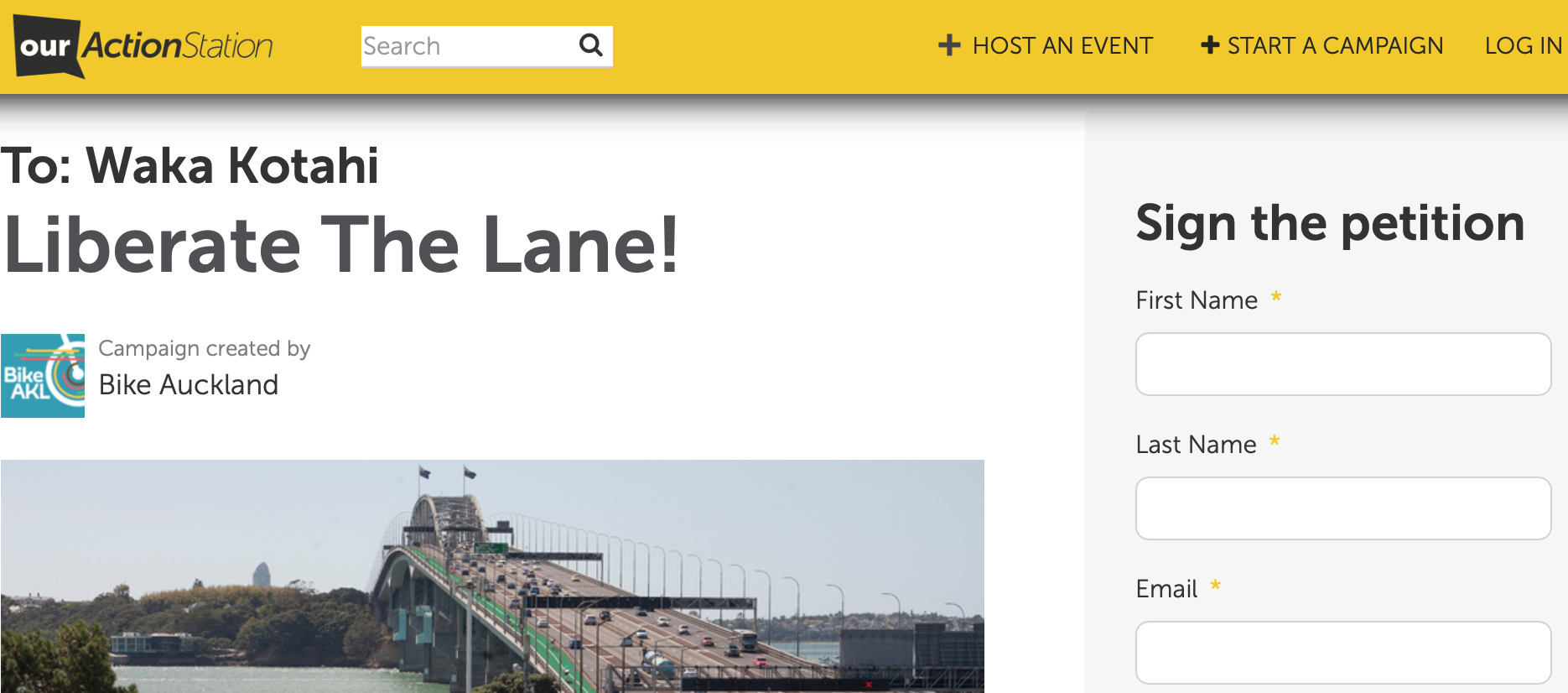
Music in a moment but first, an invitation. Please be clicking, please be signing, please be liberating a lane.