A guide to speechwriting and saving us all
Writing a speech could not be easier. You just put Ladies and Gentlemen at the top of the page and Thank you at the bottom and then you fill in the bit in between.
Now you can even get a computer to do it for you.
Actually, not to brag, but I was making that possible for people thirty years ago.
I used your automatic wedding speech writer, wrote a guy in Boston, and my mother cried. Dude, I thought to myself, it was supposed to be a joke. But then I thought: If he’s taking it seriously, maybe I should too. Thus began my own little internet adventure as a supplier of Number 8 wire AI.
Hipkins’ speech sounded like it was written by ChatGPT, declared Nicola Willis, who is, whatever else you might want to say about her shortcomings, a gifted mimic of a sneering 14-year-old in a Marsden uniform.
Okay, we’ll bite, said Stuff, who duly fed Chris Hipkins’ state of the nation speech into an AI detector. It wasn’t entirely confident the speech was entirely human, they reported, but on balance, it believed the speech was written by a real person. It gave it a 79% human score.
They continued: So then we fed some Nicola Willis stuff into it. AI said parts of it were for sure done by AI. Er, nice try AI, but actually ….those phrases you judged too grammatically complex and stiff to be human were in fact very familiar language to this erstwhile Beehive speech writer. It is what you’d get in every single draft the ministries and departments sent over in the fond expectation they had drafted you something that would work in a speech.
I especially remember a suggested opening for the Queen’s speech at Waitangi Day. The opening sentence was, I am not making this up, 96 words long.
Bureaucrats just love to write like that, it’s their natural language.
Whatever the fuck that is that keeps coming out of Luxon’s piehole is in fact his natural language and makes some kind of sense to him.
But the whole point of a speech is to offer the genuine you and somehow also make people’s eyes shine.
Allow me to recite once again my favourite Mark Twain aphorism:
The difference between the almost right word and the right word is really a large matter—’tis the difference between the lightning-bug and the lightning.
The difference between any old political speech and a political speech that echoes down history will very likely have a lot to do with a word and an idea that has become a cruelly debased currency thanks to corporate usage and abusage. I speak of the word VISION. Or as George H.W. Bush styled it in the disparaging terms of one who has found it to utterly elude them: “the vision thing.”
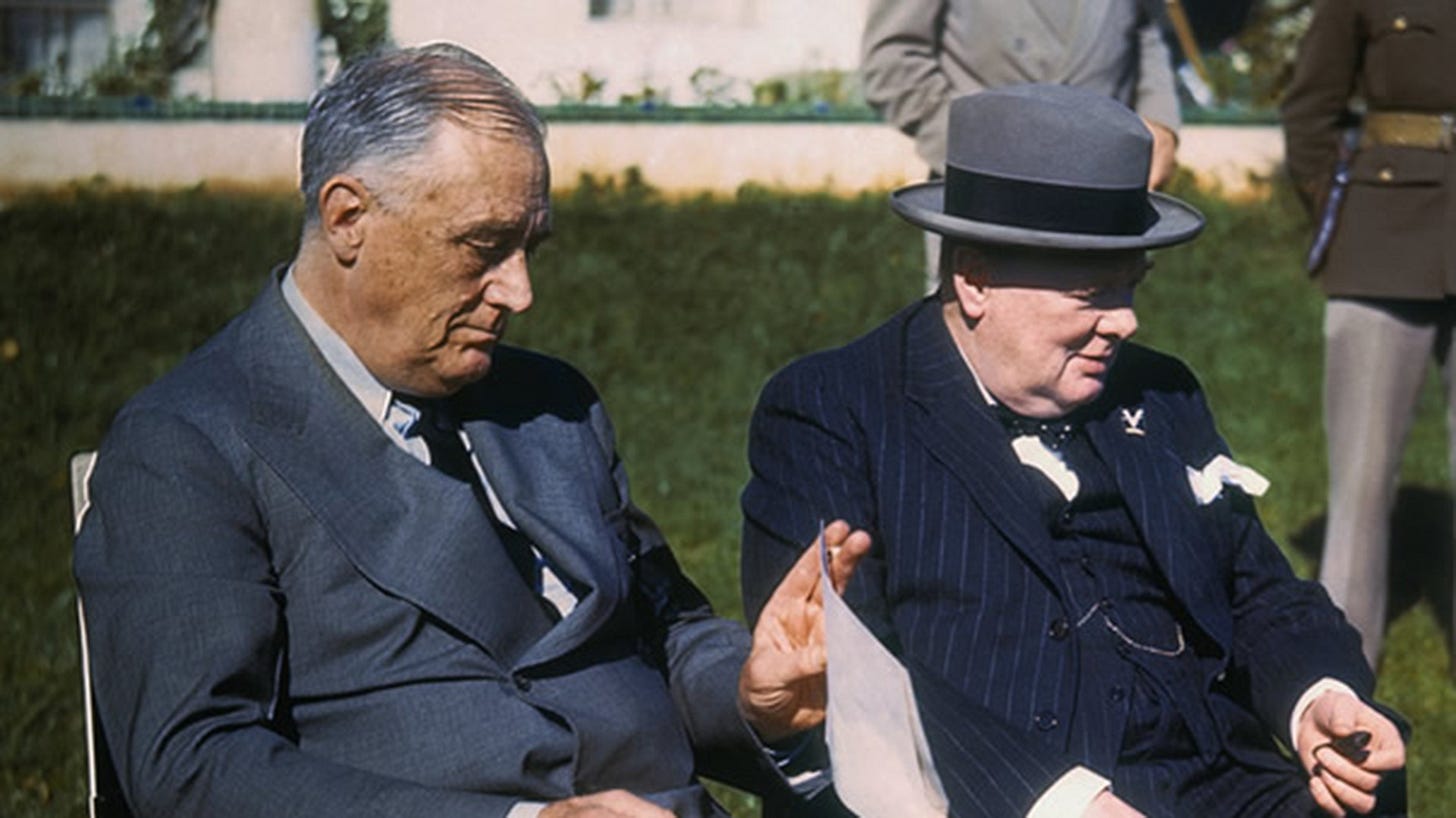
In the right hands — an FDR, a Churchill — the vision can utterly take people’s despair and evaporate it, giving people purpose and resolve, hope and belief. In lesser hands it can sometimes sound like you’re reciting the comments of the focus group back to them.
God, what would you give for a proper vision this election, arrestingly offered?
You hope for such a person and god knows they are vanishingly rare, but lightning, lightning bug, man.
What we are sure to be offered will be a whole bunch of stuffed suits telling you I came into politics to make a difference. Oh come on. Can you not get any more specific than that? You know who also made a difference? Hitler.
The Vision Thing became a debased currency, a cliche. But a vision, if you can make it work, can be awesome.
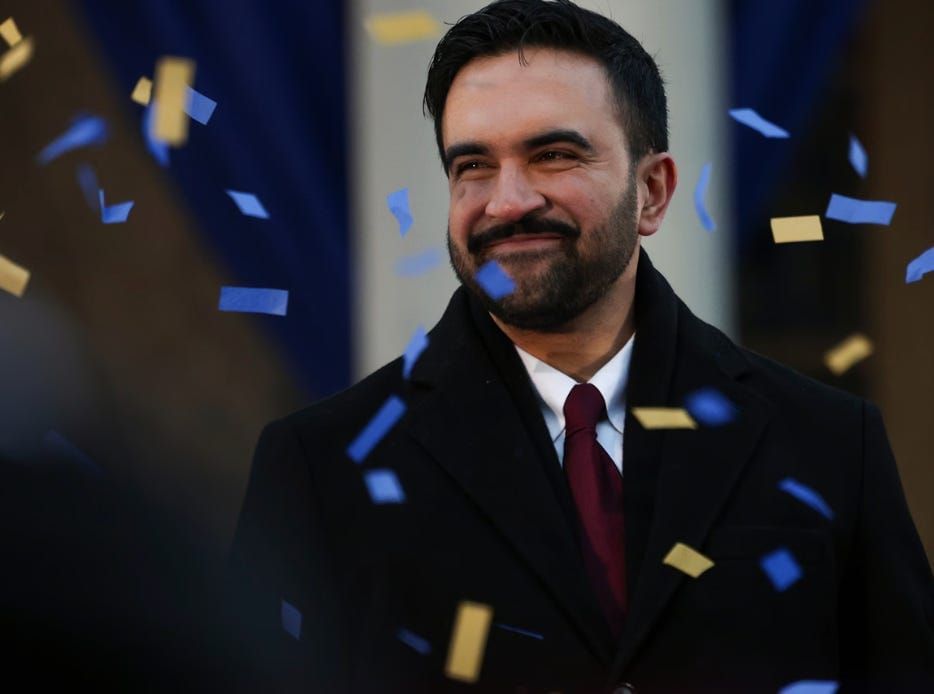
I have resolved to offer hope as much as possible in these bleak and fretful times so let us turn now to a few lines from the inauguration of Zohran Mamdani.
First he offered the resetting of the conventional wisdom and an inversion of the power balance to which everyone has become resigned.
For too long, we have turned to the private sector for greatness, while accepting mediocrity from those who serve the public. I cannot blame anyone who has come to question the role of government, whose faith in democracy has been eroded by decades of apathy. We will restore that trust by walking a different path: one where government is no longer solely the final recourse for those struggling, one where excellence is no longer the exception.
As we embark upon this work, let us advance a new answer to the question asked of every generation: Who does New York belong to?
For much of our history, the response from City Hall has been simple: It belongs only to the wealthy and well-connected, those who never strain to capture the attention of those in power.
Working people have reckoned with the consequences. Crowded classrooms and public housing developments where the elevators sit out of order. Roads littered with potholes and buses that arrive half an hour late, if at all. Wages that do not rise and corporations that rip off consumers and employees alike.
And next he gave some substantiation of all this promise with just a few necessary and perfect specifics.
That love will be our guide as we pursue our agenda. Here, where the language of the New Deal was born, we will return the vast resources of this city to the workers who call it home. Not only will we make it possible for every New Yorker to afford a life they love once again — we will overcome the isolation that too many feel, and connect the people of this city to one another.
The cost of child care will no longer discourage young adults from starting a family, because we will deliver universal child care for the many by taxing the wealthiest few.
Those in rent-stabilized homes will no longer dread the latest rent hike, because we will freeze the rent.
Getting on a bus without worrying about a fare hike or whether you’ll be able to get to your destination on time will no longer be deemed a small miracle, because we will make buses fast and free.
These policies are not simply about the costs we make free, but the lives we fill with freedom. For too long in our city, freedom has belonged only to those who can afford to buy it. Our City Hall will change that.
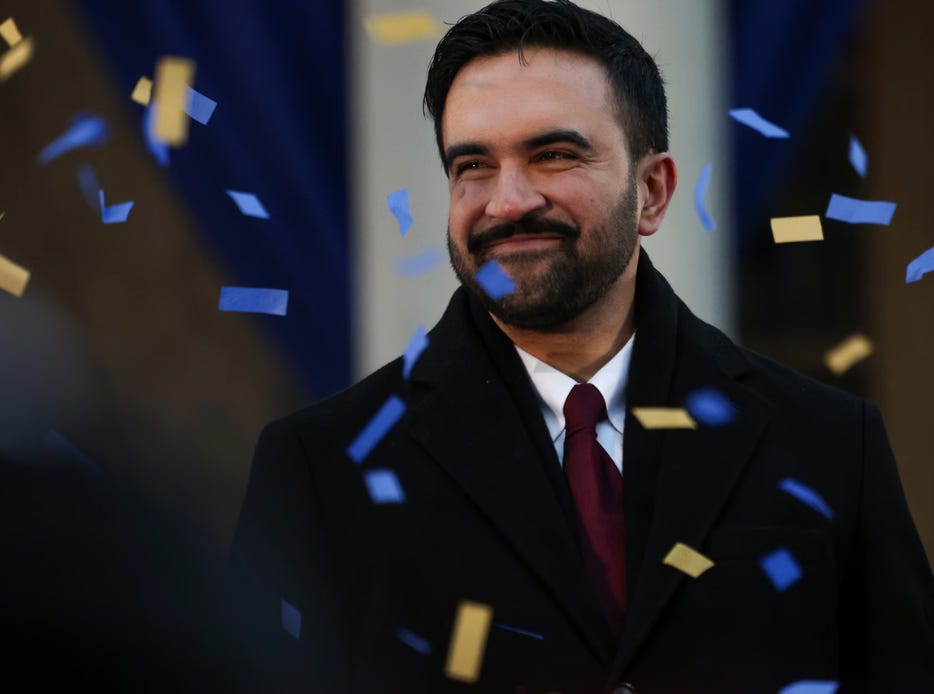
If you can give people something to have hope in and if you can give them good reason to believe it might really be possible, you can be onto something big. Huge.
This is what I try to write about all the time: the possibilities of a better future.
I also necessarily write about the people who are doing their best to stand in its way; the ones who spend all their time pandering to loathing and distrust and antipathy and hostility to anything different.
As a vision, I have to concede it still needs some work. But I do believe.