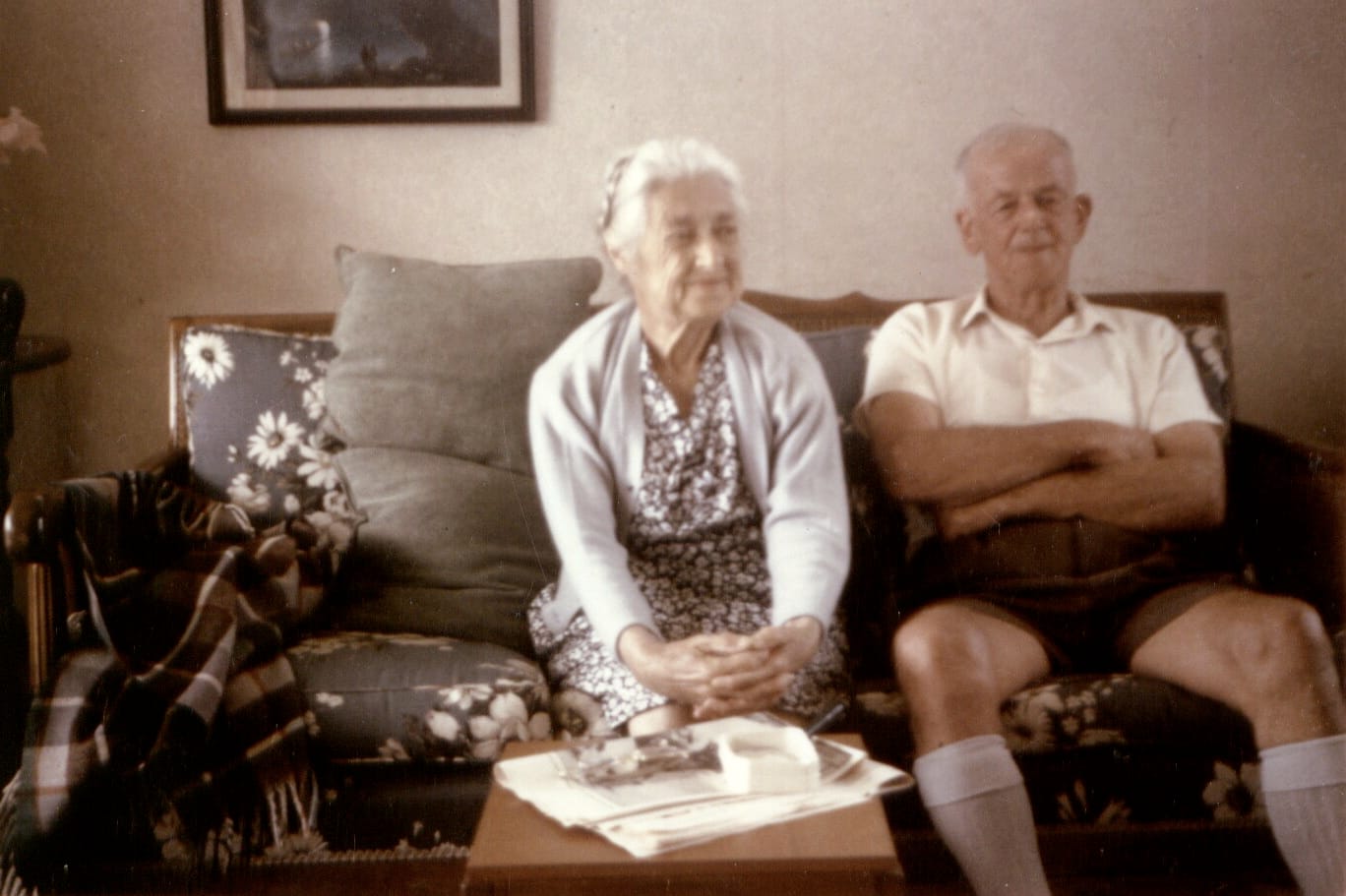
On I go with the transplanted life here in Masterton with Mum and Dad.
Days are quiet. Meals, medications, groceries: tasks that are trivial for an able-bodied son but tough for a frail parent. Talking, recollecting, fishing out papers and photos to help fill gaps.
We’re looking at an indistinct photo of Mum and her father, outside the house they rented in Masterton just after the Depression. I can't make out a cigarette but I’ll bet he's holding one. If he wasn't born brittle, life made him so.
He would have been in his early forties in the image; behind him already was a war in Europe and the rehab farm that he and his brother had walked off when the slump came. When the photo was taken he was selling insurance around Wairarapa; he would say, lot of rich farmers here.
Ahead of him was another war and an assured steady income and he signed up again, leaving behind three children and their mother, telling her he would be worth more to them dead than alive.
As best Mum can remember, it was at that point the family left Masterton for Mangaweka, possibly for their mother to be back nearer family, or possibly because that was where meagre savings could buy them a house and a paddock.
This solo mother of three would be my grandmother of previous Sunday columns here, whose own grandmother was lifted out of that landing boat onto the Petone foreshore in 1840; whose sweetheart died on the Western Front, who was a school teacher in the back blocks when she met our grandfather one day out riding; who would one day be counselling my mother — distressed at the possibility that she might have another baby on the way — with the story of the time she had thought she was in the same position and could not imagine having another: your father said ‘we can fix this’ and he ran a scalding hot bath and filled me up with gin.
And what happened? asked Mum. Her mother smiled and said, Nine months later you were born.
The world at war, daily air raid drills at school, precious little money, but Mum only ever recalls that time with the deepest fondness.
What she's remembering is a little town and a loving mother and an idyllic life, house cow in the paddock that her mother would milk and they would carry the cream cans to the greengrocer. She and her older brother and sister would walk home for lunch each day. There was a piano, and there was a radio, and on Sundays they would go to church and her mother would play the organ and teach Sunday School, and to refrain another story, the two Māori brothers Semple and Savage, who were invariably punished each day at school, would never be punished by her mother. Mum loved her calm, wise, thoughtful way; the warm world she made for them.
And then their father was on his way home on a hospital ship, and their mother was on the train to Wellington to meet him, and Mum’s first sight of them was in the carriage together as they got ready to step off in Mangaweka, and that night at the dinner table her Dad said, come sit on my knee dearie and hoisted her up and this man was a stranger to her and the rough material of his uniform scratched and he had the smell of cigarettes. That night as her mother tucked her into bed she asked, How long does he have to stay with us?
But of course he stayed, and the ballot took them onto a hill country farm just in time for the wool boom years.
But also, this man home from war, man in a man's world, took charge and the household had a different mood forever after.
And this is why she speaks so fondly of those years in Mangaweka, her warmest times. Later she would come to see, too, how tough those days had been for their mother, and it would make it all the more bittersweet.
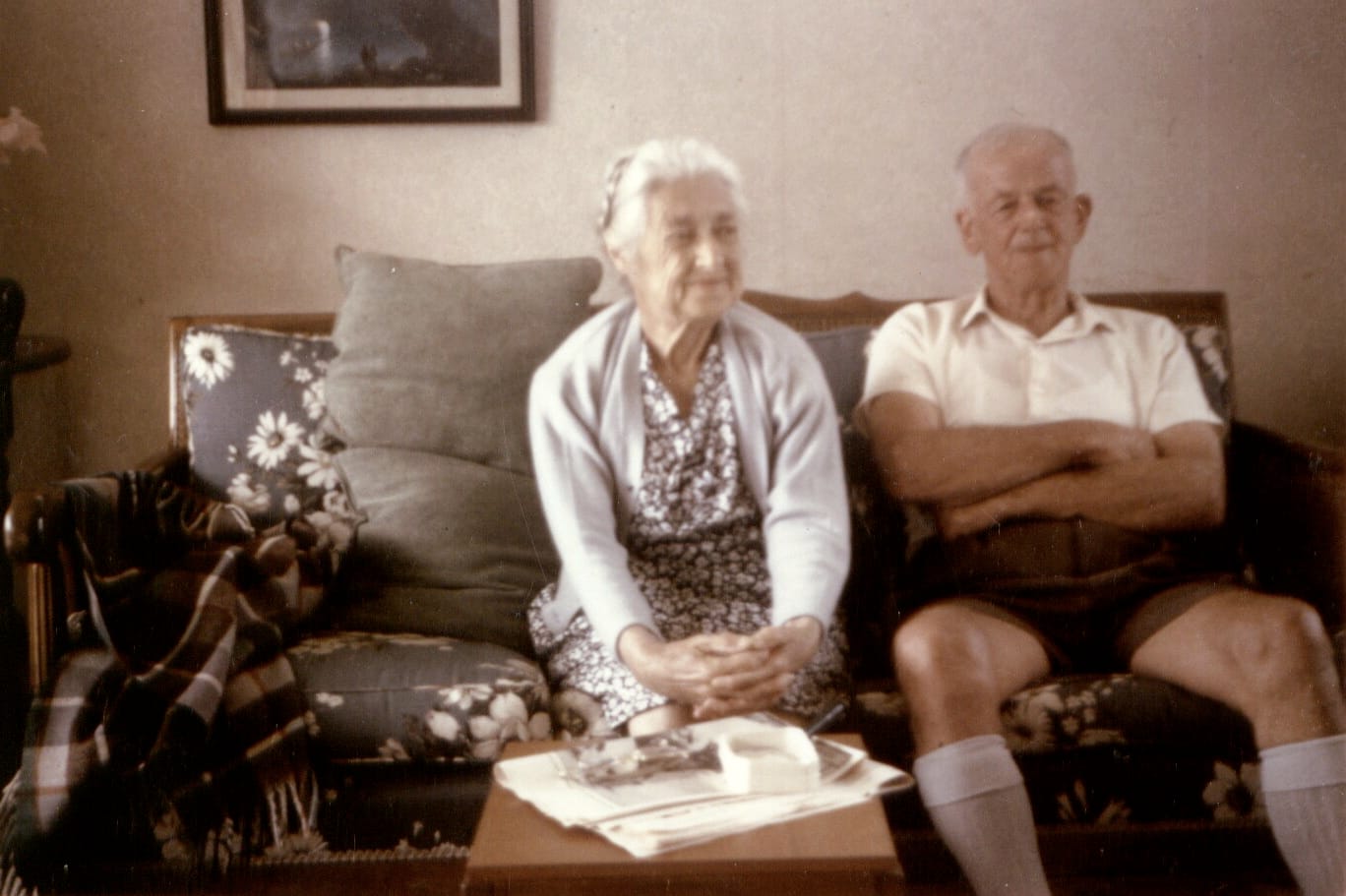
Mum was only in her thirties when cancer came for the mother she adored. She still misses her.
This morning as I was carrying trays of breakfast to them and Dad was saying to Mum, This is pretty good service isn’t it Gran, Mum said to him,
Remember when we had babies in high chairs and we were feeding them?
He nodded.
She said,
It was lovely.
And after another pause,
It was hard work. But it didn't feel like hard work.
Things you do out of love or affection are really not work at all.