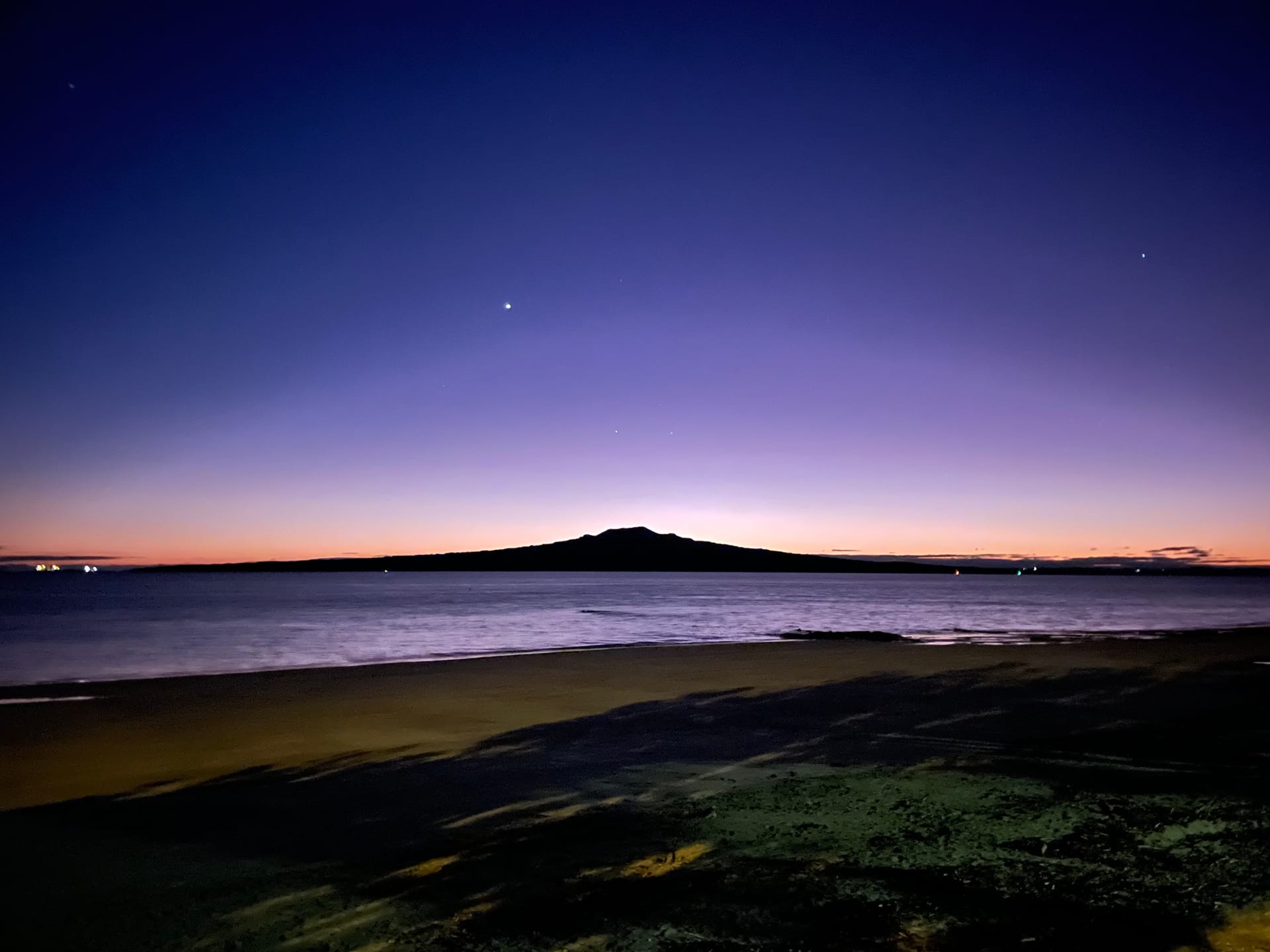
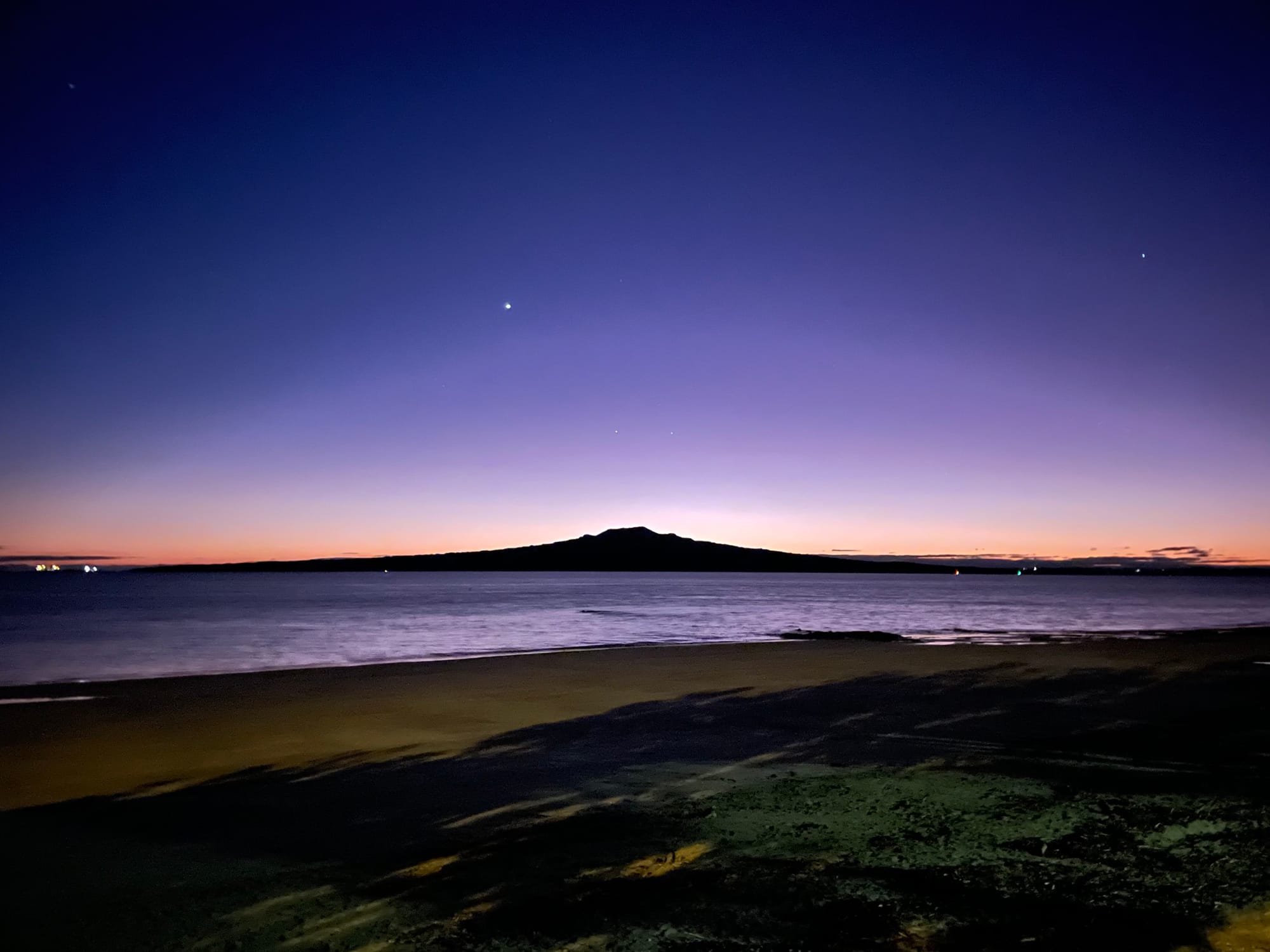
A man who no longer drinks and who once again sleeps soundly can find himself awake long before sunrise. Why not pull on the running shoes?
So chilly, so still, so hushed, these solstice mornings. The world doesn't really begin moving much before 6:00am.
It's a world I've always loved. 2:00am taking calls on the radio, all the time in the world to yarn; 3:00am in a dimmed-light hospital ward listening to music; 4:00am slugging coffee and smokes, getting an assignment finished.
5:20am, running empty streets. Alone in my thoughts.
It’s always contemplative for me, running, but it’s more staccato in daylight watching for other people, vehicles, mayhem. In empty streets you drop into a different kind of contemplation.
Taking in the stars and the first light made more vivid by volcanic ash, thinking about Matariki.
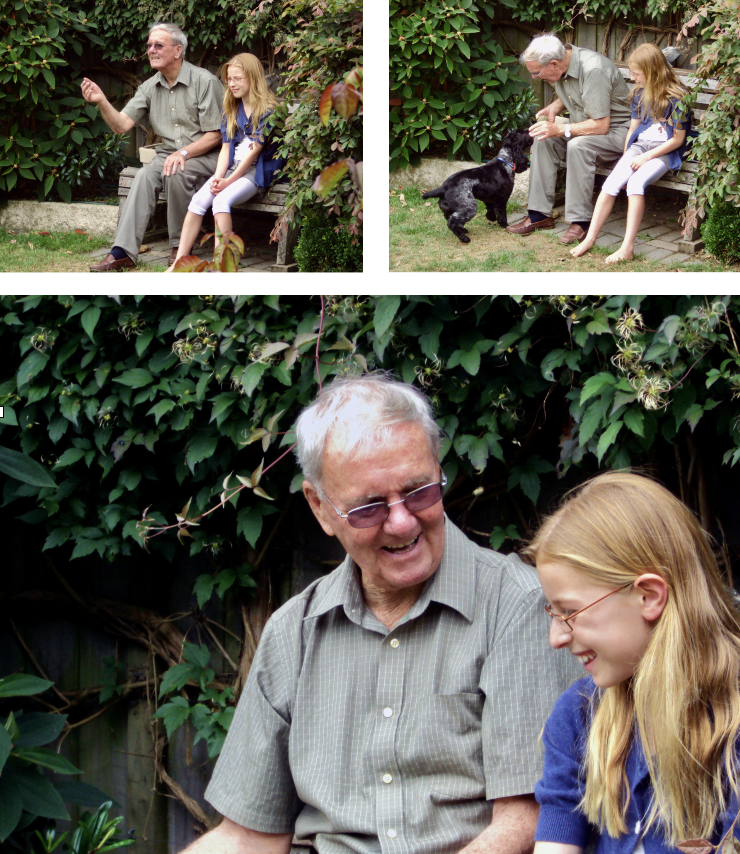
Karren said it would be nice to do something, a dinner maybe, and who would we be remembering? I said, well for starters her Dad, ten years gone now, still very missed.
We loved that idea. Karren wondered what would be the meal that remembered him best? and that shifted us to the idea of a breakfast, remembering him at the barbecue on Christmas morning, bacon and eggs for as many people as you like, full of good cheer. If ever we were away with him somewhere, he was up first and making the porridge and cracking the eggs and frying the bacon, more subdued than Christmas, but still the warm smile.
He had a warm smile for everyone, Syd, never anybody’s fool, but generous in greeting the world.
His people were in Australia first, in the Melbourne goldfields, built a whole lot of those old houses you see in Williamstown. His Dad made his way to New Zealand, to Canterbury, and Syd was born into the Depression years in Darfield. Dinner would mostly be a rabbit his father had managed to shoot. He grew up to have no appetite for them at all.
The family moved to Taranaki for farming work, Syd learned every practical thing a young man can learn, skilled forever after at building and fixing and mending.
He trained as a draughtsman, got a job laying out the new power lines for the southern Hawke's Bay, met Betty in Woodville. They married, moved to Taranaki to be farmers, had three capable and clever daughters, the third of them Karren whose name he gave two Rs in the paperwork excitement.
Before Karren was five he saw a better future in being a policeman, and there's a memory for her of running down the street to be scooped up into the arms of a man in a policeman's uniform wearing a warm smile for the world and his little girl.
First he wore the uniform, then he was a detective in Lower Hutt, yarns enough to sustain endless nights of how’s your glass mate: the doctor with a concealed compartment in the car for the abortion kit; the media personality doing nefarious things in the night; the old school safe-crackers and hard cases; the shocked numbed hours pulling bodies from the waves the day the storm hit.
So much to tell, so much to remember, and come to understand, about having such a good man in your life.
If ever I had a DIY job on the go he would load the car with the tools and come up from Tauranga to help, and steadily I got more proficient, although not without some cost to him. Building a wall one day I hauled out a concrete block, meaning to seat it better, and I was not taking it at all slowly or carefully as he leaned in to look and the block came up to meet his forehead, thoroughly brained by his son in law.
I carry on alone now and have only myself to injure; but he's still there whenever I pick up a tool he gave me.
He was strong, energetic, full of purpose; would set out each day with plans to help someone, or see someone, or explore someplace, always a happy dog at his heel, until the walks became slower and he would have to stop to catch his breath, and little by little the lungs turned to hardened chalk.
His way of gently explaining to us what was coming was to say he’d told the doctor I’m thinking of buying some new boots, should I bother? The doctor had said yes, but get them at The Warehouse.
Then there was an oxygen bottle, and then there was a room at Ryman’s and we were driving down and getting used to this new stage and how are you settling in, how are these socks, see you next weekend, and a few days on I was boarding a plane and Karren rang to say, a catch in her voice as she reached the actual words, Dad died this afternoon.
A funeral can come rushing up far sooner than you're ready to say all there is about someone who meant so much.
We stood and spoke, we drank and reminisced. And then we made our way back home still numb because hours and days aren't nearly enough to say or comprehend all there is to it.
On the first anniversary of his death, in Turangi, we got up before sunrise and took whisky and a small box down to the fishing spot he had stood at for so many contemplative hours, and we raised a glass and cast his ashes into the water and all that weekend we shared memories and laughter but that wasn't all there was to be said or remembered or understood either.
On Matariki morning I pulled on the shoes, ran as the new year’s dawning light came on, came home to make a righteous breakfast, more vegan than bacon, but still mostly the way he’d have done it. Mary-Margaret and Mitchell arrived and we spent the morning talking and laughing and remembering.
He wasn’t there, but also he wholly was, and that is the beautiful idea of Matariki. It gives you as much time as you need.