Kim Hill read out a listener’s words this morning, the most indignant of which were: show some respect.
It was odd because I'd just been listening to the same interview they were deploring thinking how measured and constructive it had been.
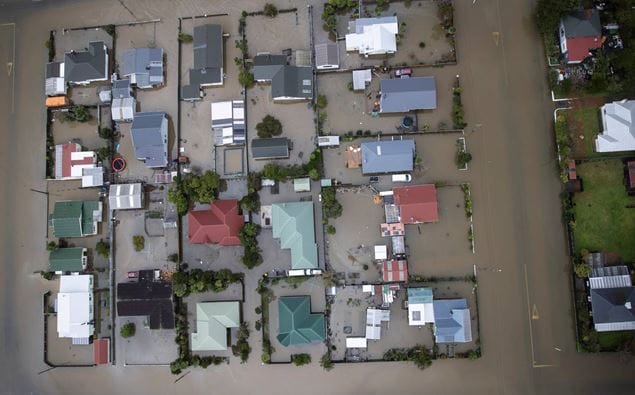
It's really grim in Westport, homes damaged, homes wrecked.
It's really grim in Marlborough - farms maybe hugely damaged, stock lost.
The restoration will take more than days, more than weeks, maybe more.
It's really grim in Germany, damage, destruction, lives lost, whole villages wiped out. Down comes the furious rain in torrents, on comes the deluge, and what scientists said we could expect to see is what we are seeing: the wild waters, the furious flames.
That is where the interview inevitably wound its way this morning. Minister and West Coaster Damien O’Connor had joined Kim Hill to talk about what happened, and just how bad things were looking, and how people were coping and what the government would be doing to help and then she asked: look, I have to ask you, about the climate crisis, are you doing enough?
His response wove together the responses he will doubtless have made many times now, walking the line between those who want more than the government judges politically viable, and those who want the government to back the hell off.
In his diplomatic words it’s plain he's acknowledging the not-so-much-elephant as utes-tractors-and-cows in the room: last week's protest.
About that protest, let’s acknowledge right here the objection from other farmers that the rally didn’t necessarily speak for them. And the objection by the farmers on the rally that the offensive ones didn't speak for them. And the objections by the offensive ones that it was their goddam right to call her a commie bitch.
But this was not a further recital of last week’s angry words but rather a recognition that whatever position you might hold, you’d be hard-pressed to deny the immensity of what’s taken shape. Here we have another deluge, making it ever more clear that as the climate changes we can expect more and more of these intense hugely damaging events. Hence, a question: Now what?
Hence, an angry listener saying show some respect at this awful time.
Is it really not the time? Is it disrespectful, really, to be talking about the climate crisis while people are suffering?
Let's imagine for a moment that it was 1942 and it wasn't flood waters but enemy bombs that had rained down on you. If you were to ask: what are we doing to win this war?, no one would say show some respect or this is not the time.
This is precisely the time.
Is it also the wrong time to raise objections? If it is, I apologise, but here it comes.
This has to do with cynical, manipulative and grossly misleading politicking. I refer to the very convenient whipping boy the Leader of the Opposition has fashioned for the purpose of giving a damn good thrashing whenever she wants to deepen division: between town and country; between people worried about the climate crisis and people who feel we worry about it too much, between people in cars and people on bikes.
Her whipping boy is a bridge that may very likely never be built but never mind that, let’s talk like the money’s already been spent. And what’s it been spent on? A bridge for walking and riding bikes. She keeps saying and encourages others to refrain: all that money for a bike bridge, but nothing for the bridges being washed away, and so on. All that money for a bike bridge, and nothing for INSERT YOUR NEED HERE.
Let me, too, refrain:
The single biggest thing we city folk could be doing to play our part in reducing emission is to get out of cars and make more of our trips on bikes.
We now have a way around Auckland that is very close to changing everything. The bridge is the missing link that connects this all together, all those cycleways, all the way around Auckland, that can carry those riders completely separate from the city’s roads. It opens channels up all over the city, making it possible for more and more people to come on board, all those people presently too scared of riding.
We aren't clamouring for bikes because we want to enhance our leafy suburbs and it goes with our lattes, we’re doing it because there needs to be a huge change in the way we get around. We can’t go on filling the atmosphere with emissions. For many of our trips we could be getting out of cars and onto bikes, and that’s what needs to happen.
A crossing of the bridge is a vital missing link in that network. We just need a lane of the current bridge and that's what we asked for, and it's what we're still asking for.
We didn’t ask for a bridge of that enormous expense and we’re not asking for it.
But I would add this: if it were to be built, consider for a moment - because I very much doubt it has been, in the cost benefit ratio calculation - the dollar value of a very substantial change in numbers of people riding instead of using cars. The health benefit of it could be immense. Maybe even, say, hundreds of millions. If it ever gets built.
To summarise our position:
What are we asking for? A joined up network.
Why do want it? Because if people can confidently ride unmolested, many more will do it.
Are we opposed to trucks and utes and tradies? No. We’re saying make things better for them and for us by making a separate space for people on bikes.
And so I ask this: why would you monster people wanting to do the very thing that could make a meaningful change to emissions in our biggest city?
Why would you object to people doing their share to tackle this problem?
This climate crisis stands to be everyones’ disaster. It will show us no sympathy and certainly no respect. Believe it or not, we really are all in this together.

Loading comments...