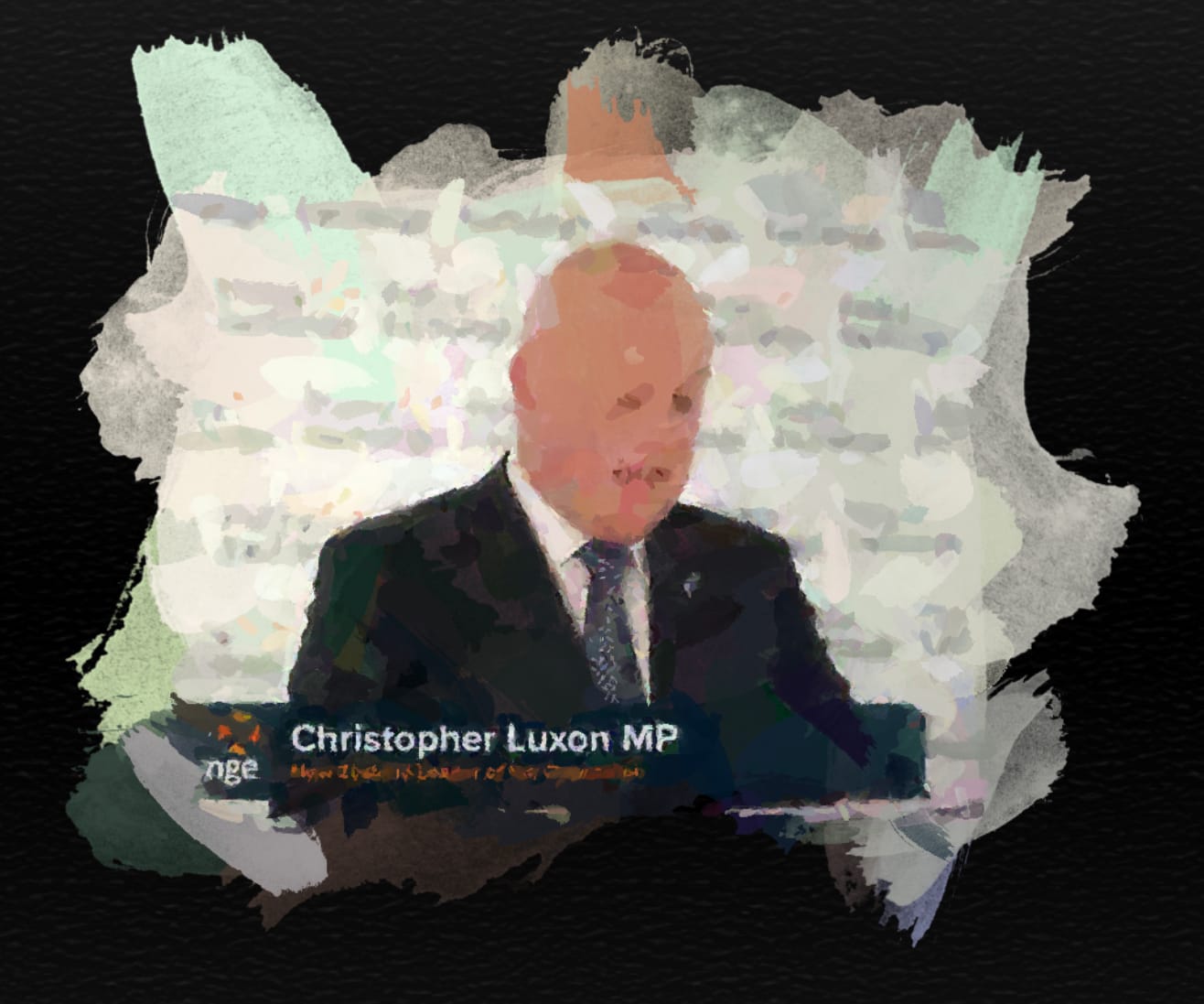
The Netflix menu tells me:
If you enjoyed OMG Jacinda at Harvard and World-Famous PM Does The Business in Europe and Cindy In Sydney, you might also like this.
So I click the photo. Oh look, it’s Old Mate Grabaseat In London.
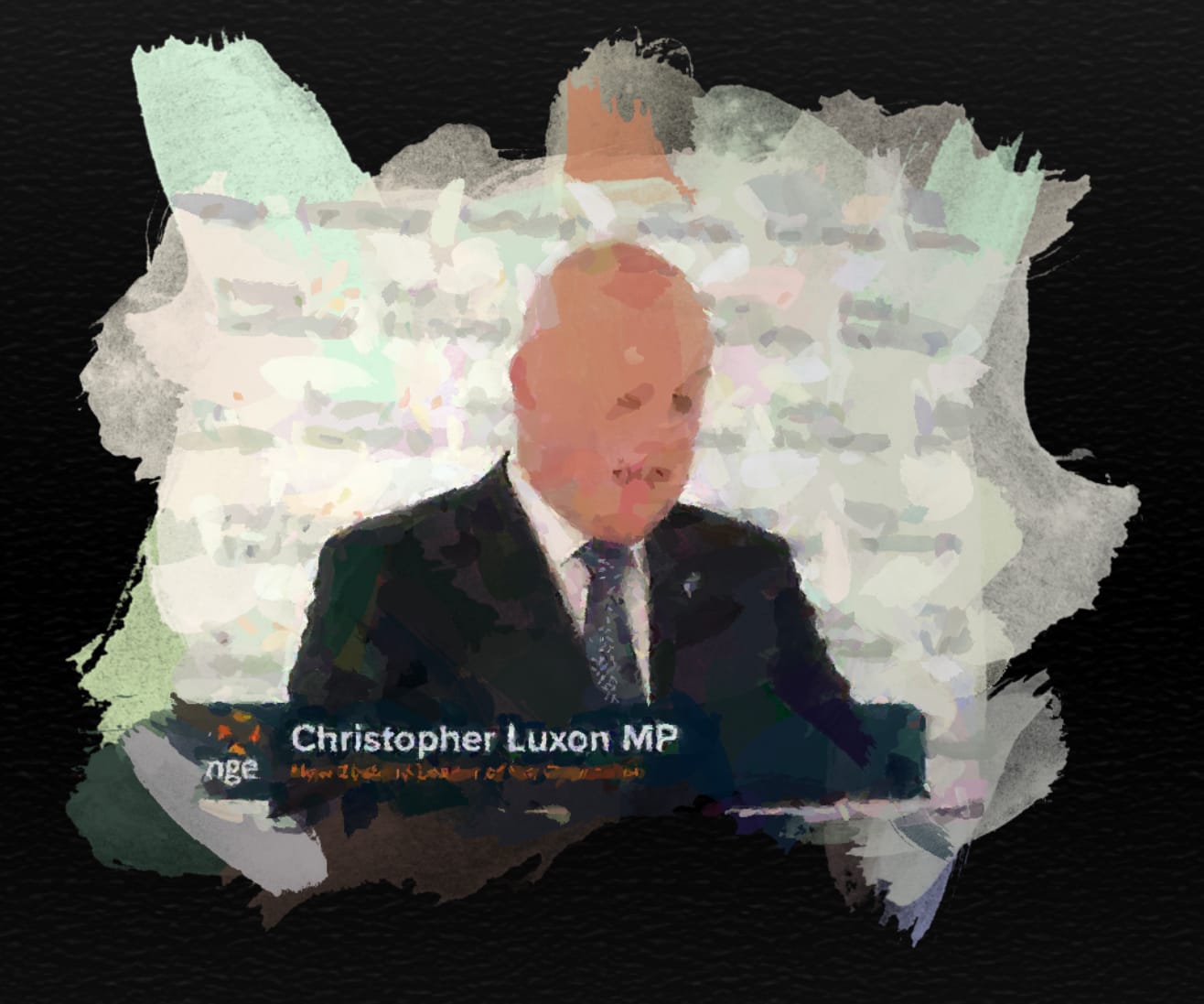
London! I’ll watch anything with London in it! Wimbledon! Lords! Mushy peas! One of the most dismal political leaders in recent memory!
The Netflix menu tells me:
Hear Old Mate Grabaseat, or OMG for short, get fully stuck in and tell it like it absolutely is about New Zelland in his inimitable leaden style.
Well, click!
The scene: a lectern, a think-tank dude making an introduction. Will there be a string quartet, or at least the Theme from Shaft, to bring on our man? No there will not, just polite applause and then polite English crickets at his first and second laboured ice-breaking sports jokes. But then the third one hits and the relief washes across his face. He allows himself a salesman’s relieved grin.
Striking, actually, how tentative his body language is, almost as though there might be a touch of impostor syndrome. Heaven knows why.
The blurb said fully stuck in, so who's going to be first to get dragged, do we reckon? Does anyone have ten bucks on our national icon? Well, winner winner, Kiwi dinner!
He shares our shame with the room: we’re not so clean, we’re not so green, we endangered our birds by introducing rats and ferrets.
So far so mea culpa. But then he says,
The situation is not helped by a design fault in some of our native birds, like the Kiwi itself, which is unable to fly.
Design fault? O.M.G OMG, are, are you victim-blaming our national icon? I’m sure it’s just a slip by your speechwriter. You can mark down their KPI later.
Who will be praised, who else will be dragged, do we think?
Well, there’s plenty of praise for globalisation, which has raised billions out of poverty and has nothing to be said against it if you don't accept anything Thomas Piketty says, and O.M.Grabaseat sure doesn’t.
He is a passported citizen of the globalised world and he is here to defend it against all non-believers. He’s a little bit worried, see, that Covid might have given people the idea that using your borders to keep people out is a not-bad idea that you might apply not only to pandemics but also trade.
Although possibly what he really has in mind is using a think-tank-pleasing free-market treatise to give him a pretext for trashing our clueless government. Cindy may have sucked in the BBC and CNN but not O.M.Grabaseat, no sir.
Anyways, first there’s a quick history of our Journey Towards Market Freedom, and a word of praise for our staunch farmer folk.
Even our farmers don’t like subsidies anymore, because it makes them vulnerable to political lobbying.
Possibly the tape then jumps, because there's no mention of all the farmers’ give us a break, give us a carve-out Carbon Zero lobbying.
When we rejoin the oration, he’s doing a little rewrite of history to cast some losers as victors.
The promise of Brexit was that the UK, once freed from the shackles of a naturally protectionist EU, would reclaim its mantle as the champion of free trade, of open markets, and of global cooperation.
Next he casts the battening down by nations of the world in the face of pandemic as maybe a rekindling of a dangerous urge, and that brings us to a j’accuse bit.
We certainly did it in New Zealand during Covid. The Government shut the country’s borders, even to many New Zealand citizens who were locked out while elderly parents died, siblings got married, or visas expired in whichever country Kiwis happened to be when the borders shut. You could come in to New Zealand only if you had a booking in a government-run quarantine centre. But the system could not cope with demand and so a virtual lottery, literally a lottery, began to get a place in quarantine. Without that place, you could not book a ticket home.
In this we find no acknowledgement that there existed no good option, just an unavoidable choice of the least bad one. Also the camera lingers on those whose case was most anguished but leaves out all those people who were taking up those places because they wanted to travel for business as usual or have their usual holiday in Tuscany. You might call them callous, or selfish, or wrong for that. But that would take the focus away from the government whom he wishes to cast as the villain here, and so there's a good deal more in that vein here, landing on a word of denunciation: cruel.
And now he bolts this on to his protectionist urges thesis:
The mood can quickly change and become defensive when people think it’s in their own interest to keep the world out, and politicians can see political advantage in doing so.
He leaves us to decide for ourselves whether people would really lack the capacity to distinguish between a pandemic and trade, though, because he’s going forward to a litany of entirely conventional business friendly thinking as he lays out a policy agenda.
More investment in infrastructure
Using technology to lift productivity.
More trade, investment, immigration
An “education system that works”
And of course: his beloved Social Investment, the nearest he offers to fresh thinking, borrowed from Bill English and popped into the microwave.
He enthuses about using data to pinpoint when and where and with whom to intervene to try to change the otherwise poor course of someone’s life.
In 2015, there were 1,500 children in state care and the Government knew from drilling in to data that by the time those kids were 35, their prison and welfare costs would be around $550 million.
Most of the oration is a pretty wooden reading from a script, but when he says drilling into data his eyes look as wide as a Texas oilman’s. It really seems to be their ardent belief that you can spend vastly less welfare money if you just drill in the right place and hit a gusher. Always with the shortcut, these people.
The punchline of course is that this stupid government walked away from this inspired idea, almost as though it's not a whole cure for the problem and what’s needed is larger structural transformation.
But you won't be hearing that here. This is a salute to business getting things done and the government getting out of the way, except when you need the stupid government to fix your unforeseen business problems.
And so the paean to open markets and enterprise comes to a close without even a flicker of consideration that the free-market way we’ve been going might be the very thing that has been careening us towards climate crisis and equally grave problems.
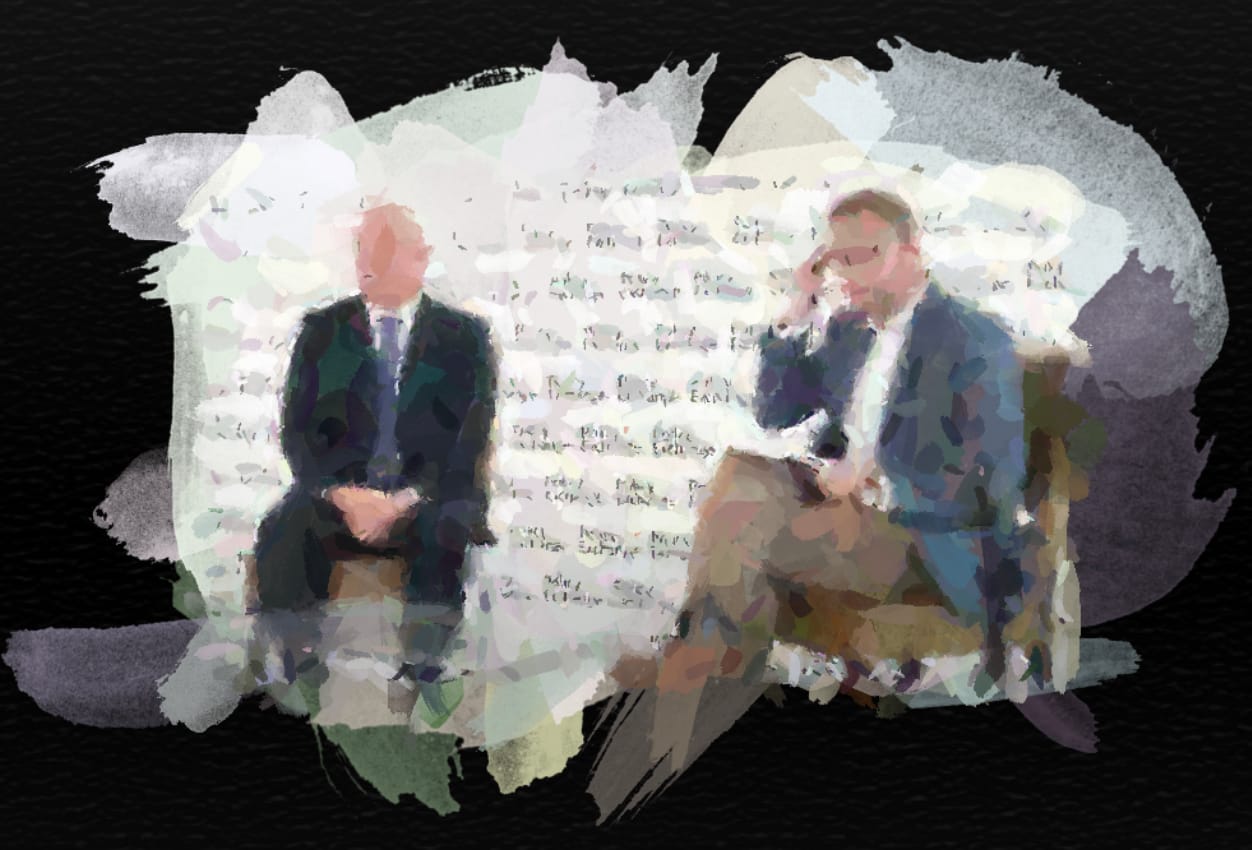
Now Mr Luxon takes a seat with his host and it’s time for questions. There are several, all of them interesting in their limited way but let's just take the response to one, and are you ready, Kiwis?? Because youse are about to get absolutely dragged.
What we need is just more consistent microeconomic reform around um just unleashing enterprise you know because we’ve kinda got into a place where the public look to the government for all the answers but now businesses are getting soft and looking to the Government for all their answers too when in fact we want to have that entrepreneurship and that enterprise to be unleashed within New Zealand. So there’s more to do.
You hear that EnZed, ya soft bastards? State of ya, looking to the government to keep you on your feet like you're some brokearse airline or something.
He is of course, rich, OMGrabaseat, but this, this, is especially rich, the notion of a man whose idea of investment and enterprise has been to buy property, who has never himself tried to get a business going, calling people who have actually given it a shot soft.
And it’s rich to turn your back in such a studied way on the role that government alone played — and that government alone was in a position to play — in giving an entire economy the necessary sustaining support when the pandemic hit.
And it’s rich to act like government is some kind of bit player in your vision of a thriving enterprise economy when we consider what lies within his very next answer.
Why I went to Dublin was because the Irish have obviously done an exceptionally good job over the last 15 to 20 years with respect to their trade and enterprise type body which actually makes investments in their exporting firms so they can get their frontier firms out there in the world.
Oh yes, to be sure that would be Enterprise Ireland would it now? The one which puts in all that money and from where comes that money, would you be supposing?Are you guessing the government? Well you would be guessing right. Although to be fair not all the money comes from that source. Would you be willing to hazard a guess who puts in a good chunk?
Step forward and take a bow, the — what did you call them OMG? — oh yes that's it:
Naturally protectionist EU
There walks, or rather sits gripping with both hands the edges of his seat, a man quite the stranger to irony, blithely unaware what useless governments have done for his corporate world over and over.
There walks, or rather sits gripping with both hands the edges of his seat, a man who has spent his entire working life inside international enterprises, fromMcDonalds onwards, and speaks their empty language, entirely at ease with the complacent certitude that the way of the global businessman is the right and true way ahead.