Hello! Here’s the year’s final freebie edition of More Than A Feilding which begins in the customary way with an invitation to become a paying subscriber.
I’d love to be able to give it all away, but sadly New World and the bookshop and Hammer Hardware continue to put their stuff behind a paywall, so I’m forced to follow suit. Trust you understand.
In a moment, this week's free edition, Because it's not too late
But first, the button.
More Than A Feilding is a reader-supported publication. To receive new posts and support my work, consider becoming a free or paid subscriber.
Because it's not too late
Sunday column December 17 2023
At some point in your childhood it will dawn on you that if you have a question for your grandparents, you'd better ask while you still can.
This, of course, is only so much use. How much do you know to ask when you're nine years old?
I have so many questions now for my grandmother, about her own grandmother, the one I’ve mentioned before, the Scots teenager lifted from the landing boat onto the sand of the Petone foreshore in 1840 by the young man who would one day ask her to marry him.
This tableau would sit perfectly in Harbouring, Jenny Pattrick's novelisation of the coming of the New Zealand Company to Wellington in the 1840s, because these are the very people it is about. Thomas McKenzie, the young man hoisting Margaret from the boat, had arrived the year before on the Oriental, the very voyage the novel follows from London to Port Nicholson.
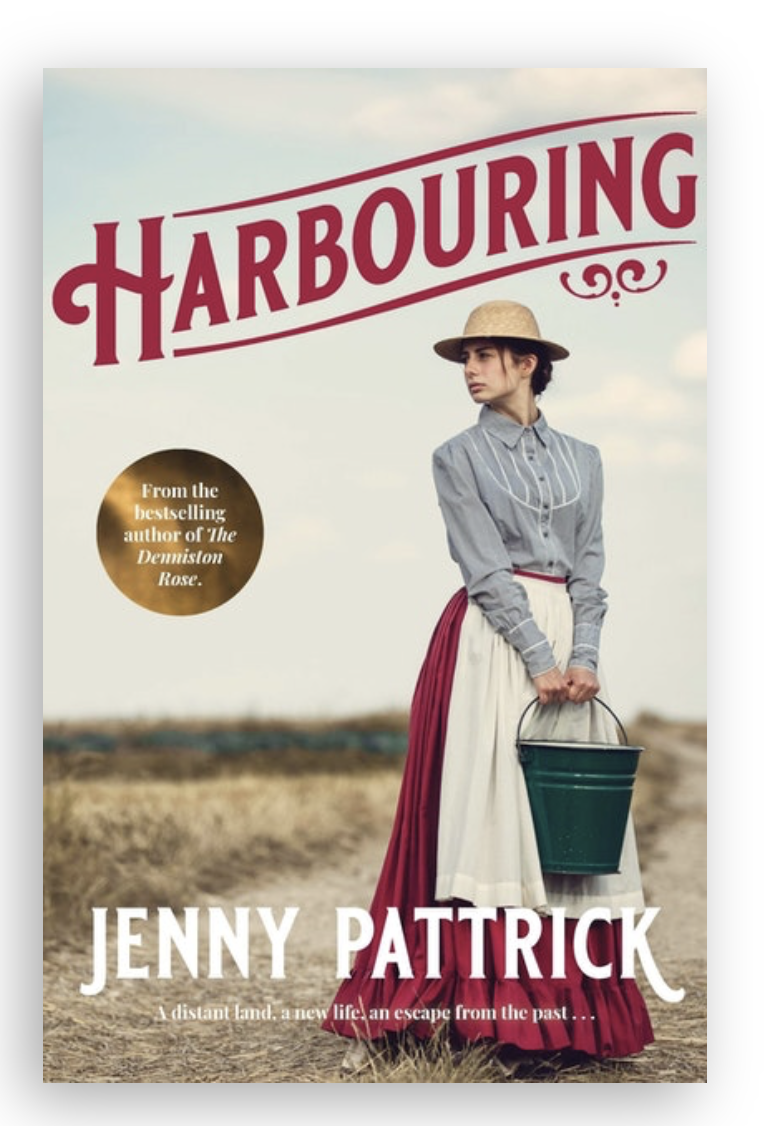
In Harbouring we see the truth of numbers and circumstance. Māori vastly outnumbered Europeans. Māori produced the food. Māori knew how to live in this land. The newcomers were very greatly reliant on them for their wellbeing.
There’s a family history that describes their first months in Kaiwharawhara, and it, too, chimes with the life described in Harbouring, the extent to which it was a fruitful and intense exchange between Māori and the new arrivals.
Once they had acquired the means, the young couple made their way north, rolling their bullock cart up the Beach Highway to Rangitikei, buying land, starting a farm, raising a staggering number of children.
On rolls the family history, through wars and slumps and wool booms and on to today, and here we are, and here I am with questions I wish I'd known to ask when I was nine, such as: what did your grandmother tell you about all that, Gran?
I'd like to know more, for instance, about the way in which that land passed to my forebears. The family history provides some bare facts but not a real understanding of how it all proceeded.
I'd like to know how much it chimes, as the earlier part of the story does, with the way things went, and let me quote from an earlier edition:
There was a Treaty. There was an understanding. And then there was very little of either. Through confiscations, shady dealings and laws that worked against the interest of Māori, the 66 million acres they had held in 1840 dwindled to 11,000 by 1890.
The first people of this land went to court, went to battle, never stopped asserting their rights, but the die was cast: the system of government and justice was set up to fail them. They went from being owners of nearly everything to almost nothing; pushed aside to the margin.
Where Māori eventually found themselves in the wake of this deprivation was: demoralised and lost. This was the damage of colonisation. It was a body blow. People can roll their eyes when you use the word, but that is what it was, and that is what it can do. It can cast the longest of shadows. The underemployment, the under-education, the incarceration, the adverse health; all of it tracks back to what was done to the first people of the land: pushed to the margin, left to fade from sight.
What has been done in the last 40 years has been intended to restore, to mend, to make possible what was promised at the outset. It’s what justice demands, but it's not only that. It’s also a promise of something richer for us all.
Where do my own forebears sit in that account? Compromised? If I were to take the attitude that has been lately asserting itself, as this new government turns its back on the good that’s been done, I would simply say
Not my problem
or,
Get over it, it was forever ago, stand on your own bloody feet
or,
Alright, you can have your land and none of our inventions, then. You'd be nothing without us.
or,
Stop trying to divide us, we're all just New Zealanders.
But I can't see it that way at all.
I look at what got derailed, after things had started so fruitfully. I look at what got trampled through greed and indifference. I look at the enduring harm that was done, and I think: why would you not keep working on mending it? Why would we not keep working to restore such a rich and valuable partnership?
I hear people say that we gave you all this technology, be grateful crap and I think, firstly, oh yeah, how much of that did you invent personally, Edison, and secondly: how much opportunity did they have to profit from that when they had been so very comprehensively dispossessed and marginalised?
I hear these people say Stop trying to divide us, we're all just New Zealanders, and I don’t hear any kind of reasoning, I simply hear people who find the truth to be inconvenient and who can only measure all other lives against their own personal circumstances.
Most of all, I wonder how they fail to see the colossal wrong of our colonising story. You greatly need help, you very much welcome help, but then once you’re okay you prefer to forget you ever needed it. Who does that?
And then I think: COVID. You greatly needed help, you very much welcomed help, but then once you were okay you preferred to forget you ever needed it. You maybe even resent it.
I’ll grant this is an imperfect comparison, but there's a truth to it that people turn a blind eye to what is not convenient.
Let me quote once again, Margaret Wilson, in her response to the objection: why are we bothering with all of this?
Because it's not too late.
This is not ancient lost history. The connection is no more remote than what you can have heard from your own grandmother recounting what she heard from her own grandmother.
In the Waitangi Tribunal, these accounts have been told over and over. They tell us that so very many wrongs were done, and need to be righted. And we see that this began as a rich and fruitful partnership and that is where we need to be again.
The relationship came undone through selfishness and disregard. This new government wants to make that selfishness and disregard acceptable again. That is no decent way to live.
More Than A Feilding is a reader-supported publication. To receive new posts and support my work, consider becoming a free or paid subscriber.