Dargaville Hospital sits at the top of a hill. I know this because one day when I wasn’t feeling very well at all, I turned left at the AA sign that said Hospital and kept going, following the signs that took me all the way to the top, where I parked, went inside, and collapsed.
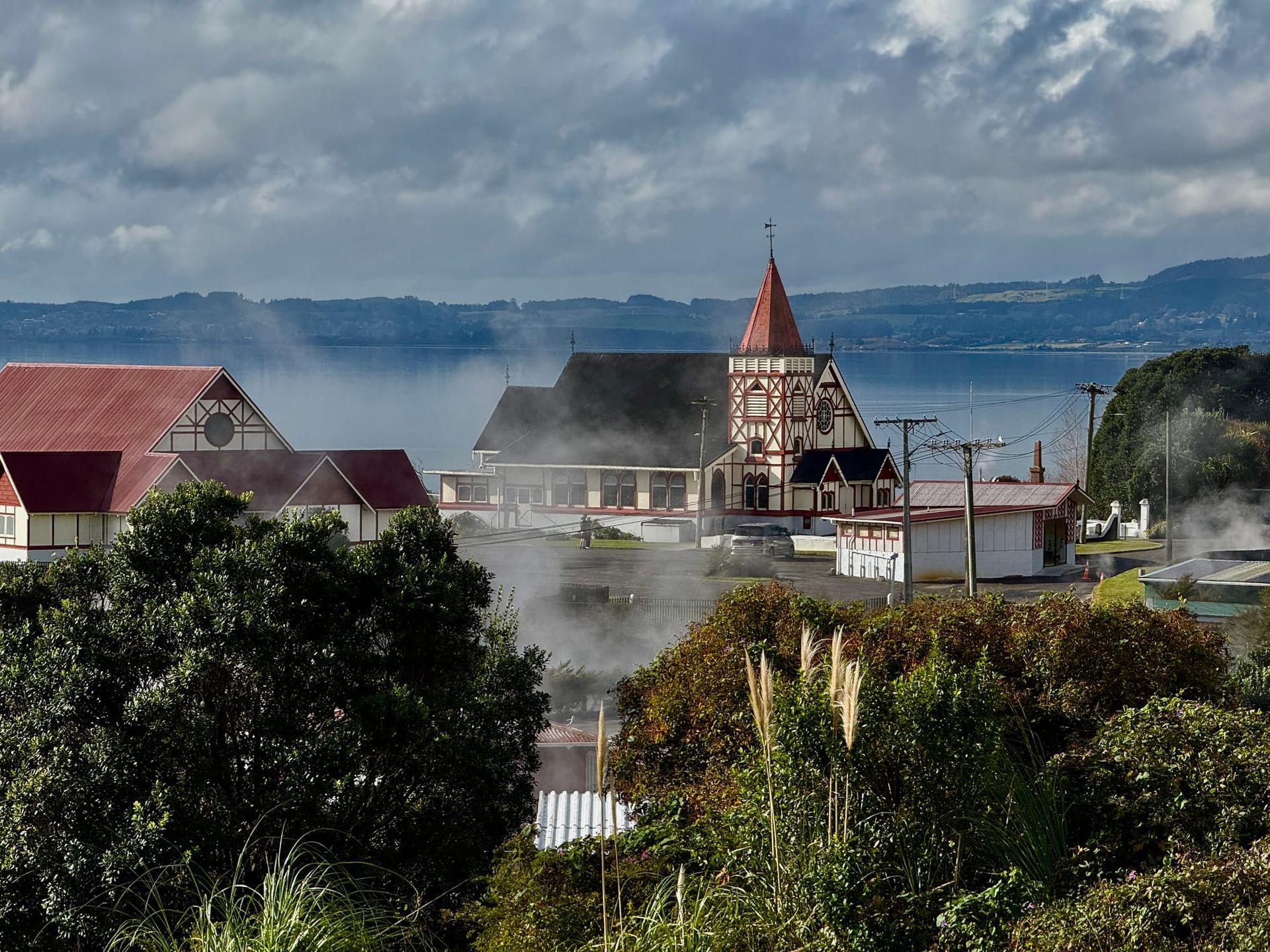
Rotorua also has its hospital at the top of a hill, looking out across its beautiful lake. Napier had one. Auckland still does. Doubtless there are more.
19th Century thinking was that you might put your hospital up out of the nasty air and filth of the town up where it’s pleasant and sunny. 19th Century thinking was also: Try not to end up in hospital. It’s costly and it’s where people die.
You might keep your distance, but that didn't mean you might not feel some pride and comfort in what you’d all managed to put on that hill.
Imagine not having one. Imagine having one but seeing it barely able to cope: ED's full to bursting; staff stretched to breaking point.
You might ask how any government would make tax cuts a higher priority than making sure our hospitals have enough.
Turn left at the AA sign saying more money and more taxes and keep following the signs.
Right-leaning politicians love to use the word socialism as a catch-all denunciation. But our health system, like those in most of the prosperous and sane world is the very embodiment of the word. Free access for all, funded by tax.
The alternative is the American one, where a diagnosis of cancer can be a track for bankruptcy notwithstanding whatever health insurance you may have.
If you want to make an argument for the whole concept of tax, and for the sound basis of From each according to their ability, to each according to their needs, health care is the obvious place to start.
Do you like the system we have? Or would Sir like to have another look at that cancer and bankruptcy combo?
And does Sir like the system we have of the modern state in which we all pay taxes in a civilised society protected by the Rule of Law? Or would Sir prefer the law of the jungle and taking one's chances on getting mugged or cheated or knifed in your sleep or driven from your home by tyrants and his armed thugs?
People like Simeon Brown seem to have this notion of tax as some kind of political outrage and not the very reasonable application of what we like to call the Social Contract. (In short: you agreed to this arrangement when you said you didn't want to be knifed in your sleep or be driven from your home by tyrants.)
To refrain from earlier in the week: Imagine a continuum. It runs along a line that begins at 'In this country you pay hardly any tax all' and runs all the way to 'In this country you pay a decent chunk of tax'. Now let's map some actual countries to this line. At the no tax end we see:Guatemala, Bangladesh, Haiti, South Sudan, DR Congo. At the other end, we see: Denmark, Sweden, and Norway
Where would you prefer to live?
Let’s now consider the way we go about collecting tax, and the ways we go about deciding what’s taxable.
What do people do with their wealth? Do they just put it under the bed? Or do they make it work for them as hard as it can? Do they take a desultory interest? Or do they pay a great deal of time and attention to what their money is doing and where they should put it? These are rhetorical questions. Just consider what you'll see in an episode of Industry or Succession if you have any doubts about this.
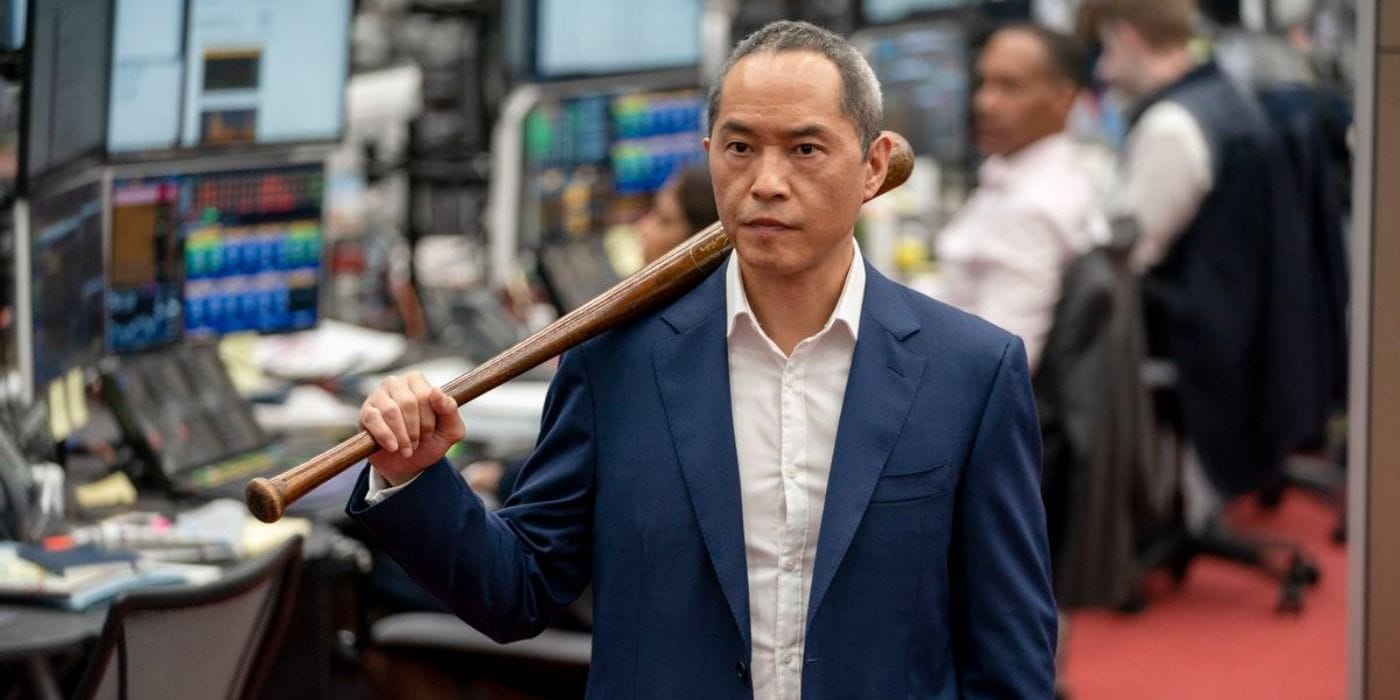
Now. What does that hard working money produce? More money. The wealthy like call it wealth generation, but let’s call it by a simpler name: income.
People like Simeon Brown don’t like to hear any argument about making tax fairer. On reflex they will recast it into something like:
You worked hard for your money and you put it into a house or a business and now they want to tax you again for it.
They like to talk about wealth tax as some kind of other animal. But for the largest part what everyone who’s proposing even when it’s called wealth tax is still income tax. Wealth earns income just like a wage or salary earner but depending how it's earned — for example capital value growth — it doesn't necessarily get counted that way.
If only certain kinds of income are getting taxed, is that fair?
If a wage and salary earner is a taxed on all their income but people with the most wealth are only getting taxed on some of their income, is that fair?
How we tax is hopelessly off-kilter. Things have become completely lopsided.
Put like that, it sounds only fair and reasonable. Why shouldn’t we all be paying our fair share to make sure we have that shining hospital on the hill? (There’s also the question of vaulting inequality, but let’s not overload things here.)
It ought to ring like a bell, the fairness and justice of that proposition. But good luck getting any kind of political traction with it. The right-wing parties have made an absolute fetish of getting taxes down and demonising the whole concept of tax, like they've forgotten there was ever a Social Contract. Or maybe they actually just fancy their odds against tyrants and people who might knife them in their sleep.
What to do? How do you talk people into once more paying a fair share? What can you realistically hope for?
Let's consider Richard Seddon and Michael Joseph Savage.
Seddon comes into office and sets about breaking up the enormous land holdings and giving people a shot at their own smaller farm; he gets an Old Age Pension established; gets a bunch of workers rights implemented, and in Europe, people say behold the social laboratory of the world! But in truth Seddon was more pragmatist than ideologue. He could see what people had developed a great hunger for. He delivered what he judged would get wolfed down. Once that was done, he was business-as-usual.
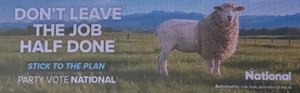
Then in the wake of the Depression the first Labour government goes gangbusters building houses for people to rent. By 1939 they had built over 5,000 and there were 10,000 applicants on the waiting list. they picked up again after the war and by the time they were done in 1949 they had built 30,000 state houses, with 45,000on the waiting list. Adjusted for population, it was the equivalent of building 10,000 homes a year today. And it achieved this in the teeth of National party advertisements like this one invoking as ever dread Socialism.
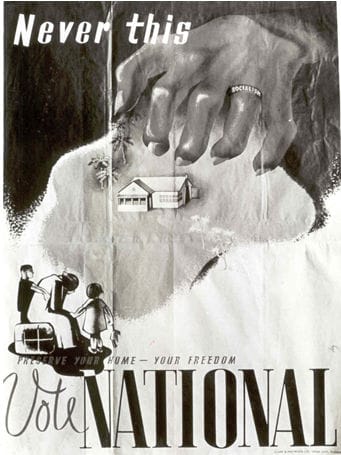
But also it's worth noting what kind of homes they built: not high-rise modern estates the way the Europeans were doing, but detached bungalows on big sections. These were houses that were more of the same; more of what people were used to. If you want your revolution in New Zealand, maybe don't change the uniform or the dinner menu.
Or to put it another way: offer a change that answers a pressing need, but is also not too hard for people to envision.
So. Back to making the case for tax. How?
How about this? Make it all about the word income, eg:
Whatever kind of income you earn, you'll pay tax on it.
And then you set out how income might include capital value.
The crucial point becomes, therefore:
Everybody's supposed to be paying their fair share, and if some people are earning income and not paying tax on it, how is that fair?
Campaign the bejesus out of that proposition, I reckon.
Leave aside for now the question of which policy best achieves this. For any of them to happen, there needs to be a left bloc vote. And if you're voting for the Opportunity Party, you need to be holding a promise from them to go with the left.
Because it's got to be a vote for the people who are thinking differently.
And it's got to be a vote for the people who are thinking better.
And it's got to be a vote for people who don't have an irrational objection to tax.